
Last updated October 31, 2026
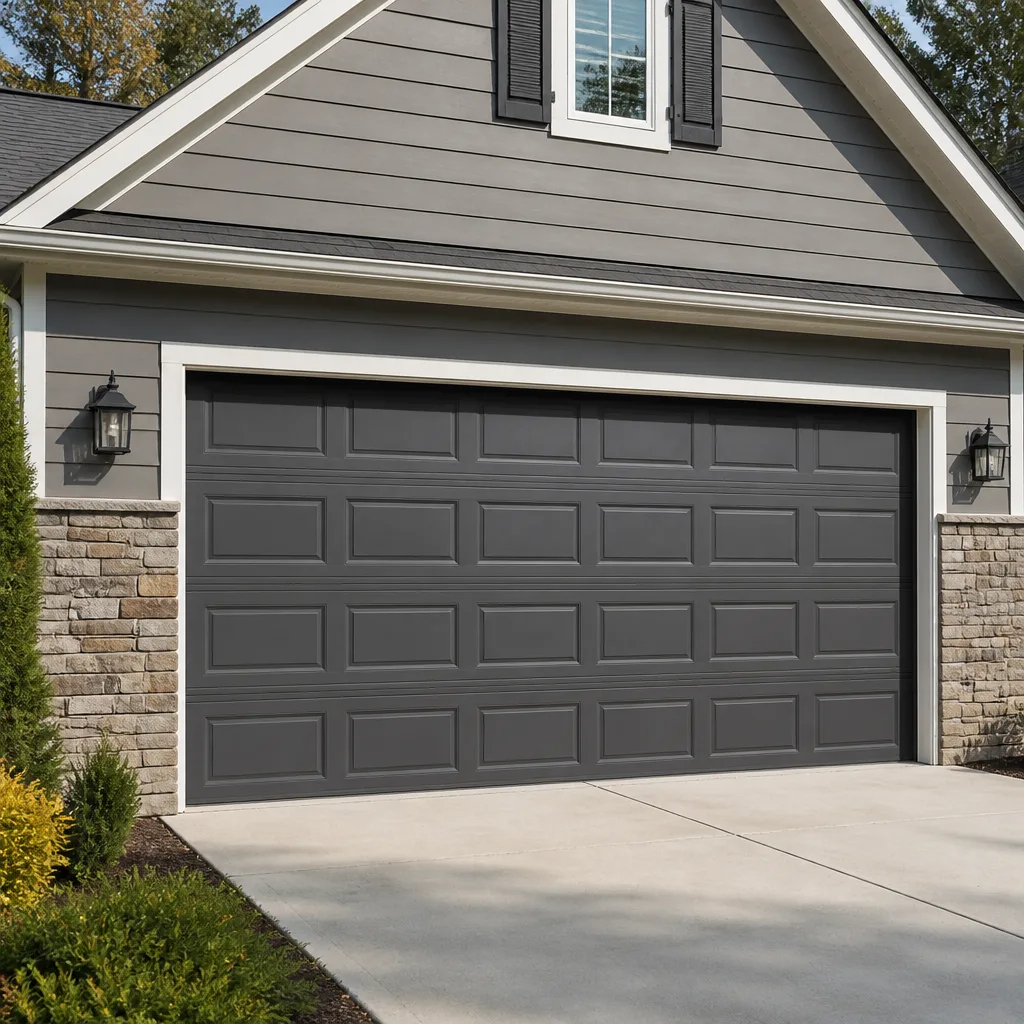 Raised-panel steel
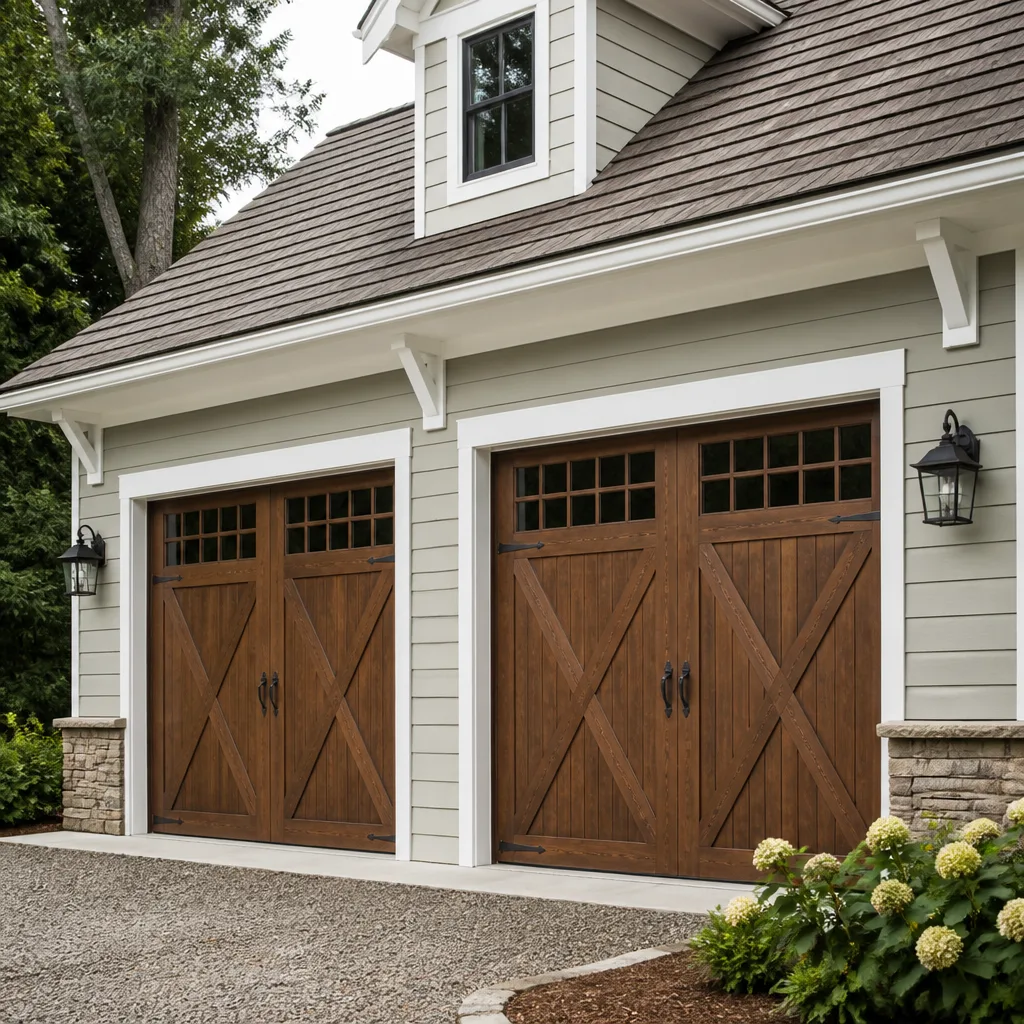 Carriage house
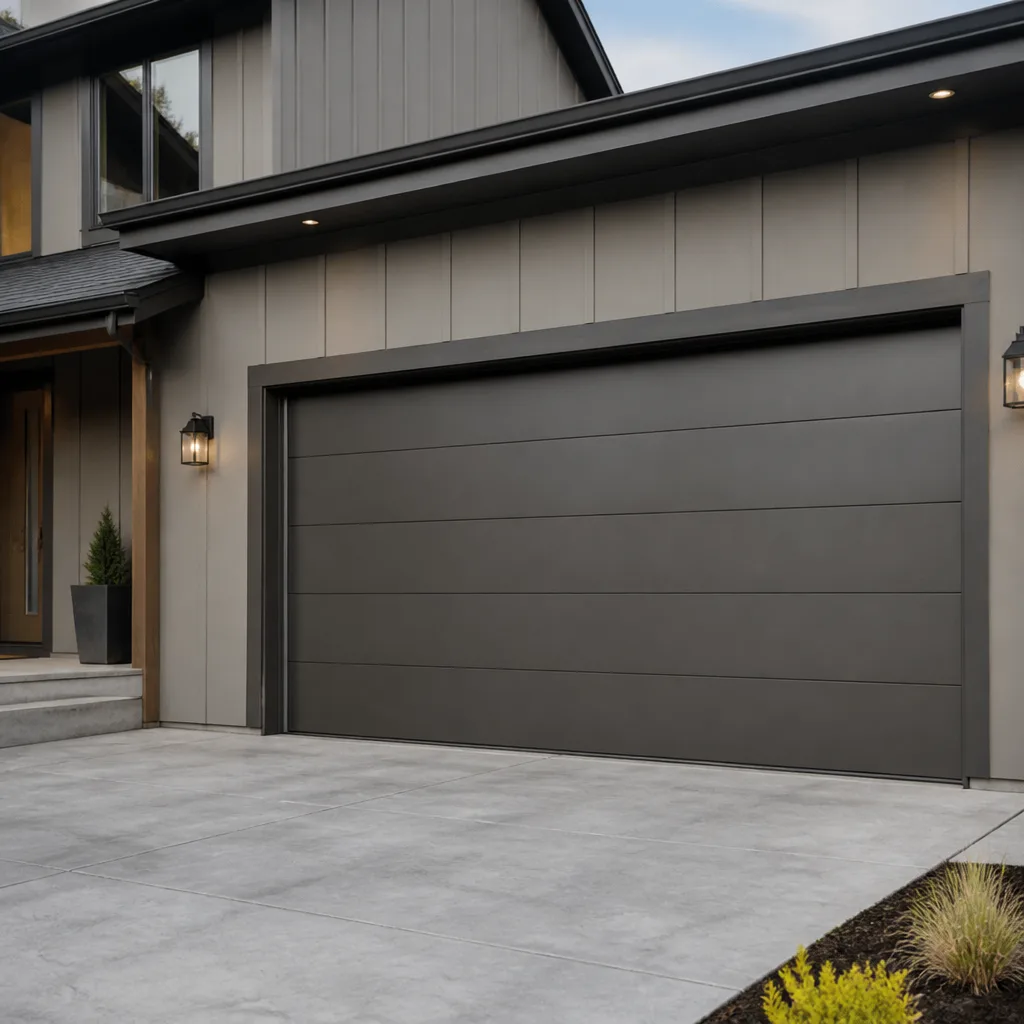 Modern flush
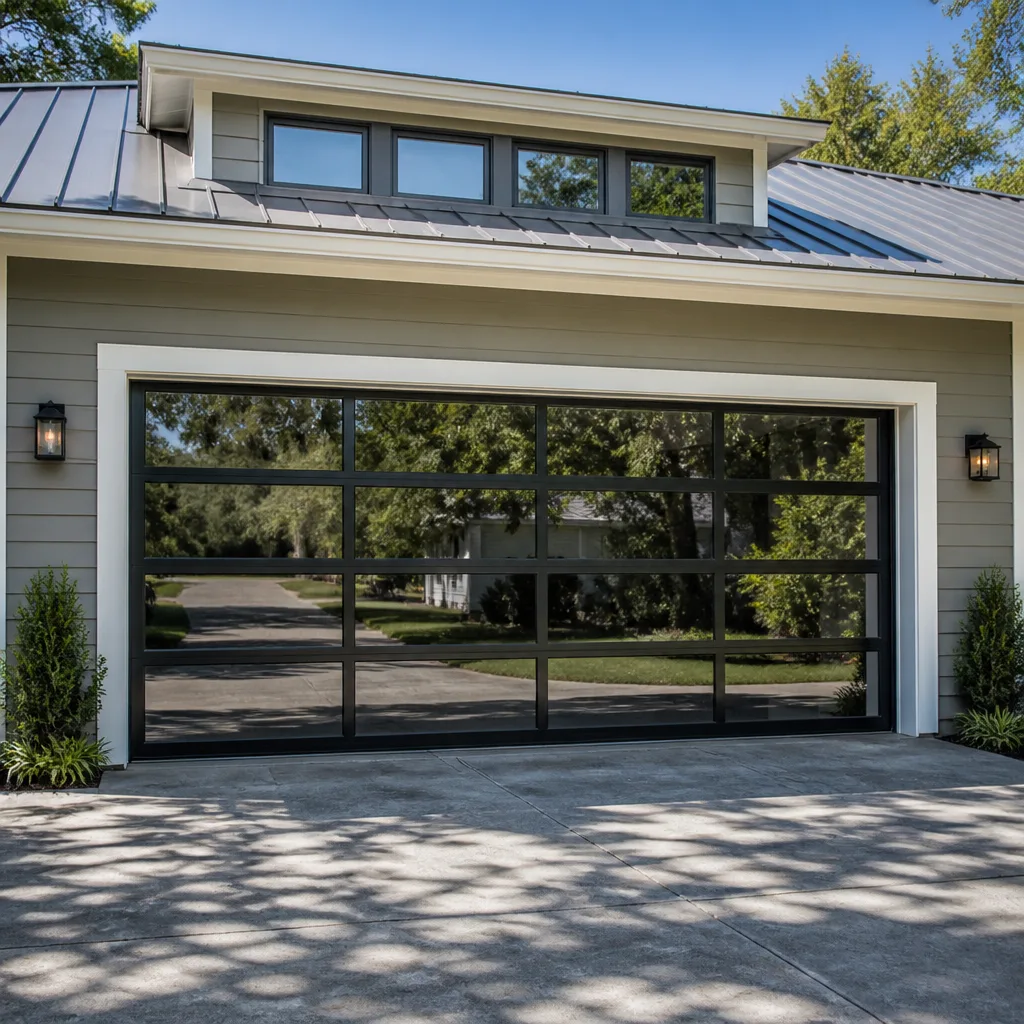 Full-view glass
 LiftMaster openers
 Chamberlain openers
Full 25-point door and opener safety check with every visit - springs, cables, rollers, tracks, and your LiftMaster or Chamberlain opener included
You get a price before we start. It does not change when the truck arrives.
Get your free estimateThe Complete Garage Door Repair Guide for Huntington Beach Homeowners
A garage door one block from the Pacific ages differently than one in Riverside. Coastal salt air corrodes springs and hardware up to 40% faster than inland conditions, yet most online repair guides are written as if every driveway sits in a climate-controlled suburb. This guide is different. We wrote it specifically for Huntington Beach, where marine layer humidity, salt spray, and UV exposure create a unique set of failure patterns. By the time you finish reading, you’ll know how to diagnose the most common coastal-specific problems, which fixes you can handle yourself, and when to call a specialist who works on the brand you already have.
Quick Answer
Garage door repair in Huntington Beach most commonly involves salt-corroded torsion springs, UV-brittle weatherstripping, misaligned photo-eye sensors, and opener failures caused by humidity-driven circuit board degradation. Most repairs fall in the $120 to $450 range depending on the component, with spring replacement on the higher end and sensor realignment on the lower end. The fastest way to identify the exact problem is a visual and auditory inspection based on the diagnostic framework below, followed by a call to a technician who carries the right parts for your specific system.
Styles & brands we work with
Table of Contents
- Why Huntington Beach Garage Doors Fail Differently
- The Diagnostic Framework: Matching Symptoms to Failed Components
- Torsion and Extension Springs: The Salt Air Problem
- Opener Failures: The Humidity Factor
- What You Can Safely Fix Yourself
- Huntington Beach Permit Requirements for Garage Door Work
- Documenting Repairs for Homeowner’s Insurance Claims
- Brand-Specific Notes: LiftMaster, Chamberlain, Craftsman, Raynor
Why Huntington Beach Garage Doors Fail Differently
Drive around Huntington Harbour, Edwards Hill, or the streets near Main Street and you’ll notice something about the garage doors: they don’t corrode evenly. The lower tracks and bottom panels show rust bloom years before the upper sections. That’s not random wear. It’s salt air settling on surfaces that stay damp after the morning marine layer burns off. The ocean-facing sides of homes get the worst of it, but even properties six or eight blocks inland deal with measurable salt deposition, especially during onshore wind events in late spring.
The corrosion rates matter because they change what you should watch for. A steel torsion spring in Huntington Beach can develop surface pitting within two to three years of installation. That pitting creates stress risers, which are weak points where the spring eventually snaps. Homeowners in coastal zones often assume a garage door failure is sudden, when in reality the breakage has been developing for months. The first sign might be a thin line of rust along the spring coil, or a door that slows down slightly when opening. By the time the spring breaks, usually with a loud bang that many people mistake for a car accident or a gunshot, the corrosion has already done its structural damage.
UV exposure from our long, clear summers works on the weatherstripping and vinyl trim from above. The bottom seal, the side jamb seals, and the trim around the door take direct afternoon sun in Huntington Beach. That material hardens, cracks, and loses its flexibility. When the bottom seal stiffens, the door no longer closes tightly against the driveway slab. Gaps form. Bugs, dust, leaves, and salt-heavy air move into the garage. Interestingly, a UV-brittle seal is also one of the most common reasons homeowners report rodents entering the garage. The telltale sign is daylight visible under the door when it’s closed, especially at the corners.
Humidity is the third factor. The marine layer that keeps Huntington Beach ten degrees cooler than Santa Ana in July also keeps the inside of your garage damp for hours longer than an inland garage. Wood panels on older homes absorb this moisture and swell. The swelling changes the weight and balance of the door, which forces the springs and opener to work harder. The result is premature wear on every component in the system. If you have a wooden garage door and it suddenly seems heavier, doesn’t stay in place when disengaged, or scrapes against the frame in humid months, the panels themselves need evaluation before any mechanical work is done.
The Diagnostic Framework: Matching Symptoms to Failed Components
Here’s the approach we use to identify garage door problems in Huntington Beach before ordering parts or making repairs. Work through these checks in order. Most issues fall into one of four categories: springs, rollers and tracks, opener electronics, or panel and seal damage.
- Listen first. A grinding noise that occurs only when the door moves points to worn rollers or dry tracks. A clicking at the top of the track usually indicates the opener’s gear and sprocket assembly is stripping. A loud bang followed by a door that won’t move is almost always a broken torsion spring. A door that grinds when closing and stops or reverses typically has a track alignment problem or a rusted roller that’s jamming in the rail.
- Watch the balance. Disconnect the opener using the red emergency release handle. Manually lift the door to waist height. A healthy door stays in position or moves very slowly. A door that slams down or shoots up has a spring problem, either broken or out of adjustment. This is a tension test, not a repair step. Do not attempt to tighten or replace a spring without proper training and winding bars.
- Check the safety sensors. Huntington Beach garages accumulate dust, salt film, and spider webs on the photo-eye lenses near the bottom of the door tracks. If the door refuses to close and the opener lights flash, check whether the sensor lenses are clean and whether the small indicator LEDs are solid, not blinking. Misalignment from a bumped track or a loose mounting bracket is the most common sensor-related reason a door won’t go down.
- Inspect the emergency release cord. If the opener motor runs but the door does not move, the emergency release may have been pulled accidentally, disconnecting the trolley from the drive chain or belt. Re-engaging it usually solves the problem in under a minute, unless the trolley itself is stripped.
- Look at the cables. The lift cables attached to the bottom brackets on each side of the door should be taut and straight. A frayed or slack cable, especially on the side opposite a broken spring, is a warning sign. Cables under tension can snap and cause serious injury. Do not remove or loosen cable hardware yourself.
One pattern we see in Huntington Beach more than inland: the same door may have two problems at once. A corroded roller and a tired opener circuit board often fail within weeks of each other because both have been stressed by the same environment. Fixing only the roller buys a month of quiet, then the opener dies. That’s why diagnostic sequencing matters. Check the mechanical components before blaming the electronics, but check both before assuming a repair is complete.
Torsion and Extension Springs: The Salt Air Problem
Torsion springs are the thick coils mounted horizontally above the door opening. They store the energy that counterbalances the door’s weight. Most residential doors in Huntington Beach use either one or two torsion springs depending on the door’s width and material. A typical steel door for a two-car garage weighs between 150 and 250 pounds. Lighter aluminum and glass doors, popular in modern Huntington Beach home designs, may use a single spring. Wood doors often need two.
Salt air is the enemy of spring steel. Modern springs are galvanized or oil-tempered, which helps, but coastal exposure still produces pitting and micro-cracking over time. A spring rated for 10,000 cycles in a dry inland climate may only deliver 6,000 to 7,000 cycles in Huntington Beach. For a family that opens the garage four times a day, that’s a difference of roughly three years versus four and a half years of service life. If you purchased your home eight or ten years ago and the springs are original, they’re likely operating on borrowed time, in our experience.
| Repair or Replacement Part | Typical Cost in Huntington Beach | Notes |
|---|---|---|
| Single torsion spring replacement | $180 – $280 | Includes labor; price varies by door weight and spring cycle rating |
| Double torsion spring replacement | $280 – $420 | Recommended when both springs have equal wear |
| Extension spring replacement (one side) | $120 – $200 | Older-style systems; both sides usually replaced together |
| Cable replacement (one side) | $90 – $160 | Often done alongside spring work |
| Roller replacement (10-12 nylon rollers) | $100 – $180 | Quiets operation and reduces track wear |
These ranges reflect current labor rates in the Orange County coastal market, not national averages. Huntington Beach repair pricing runs slightly above inland cities like Fountain Valley or Westminster because of higher technician travel costs and the reality that corrosion often means components take longer to remove. A quick note on safety: torsion springs are wound under several hundred pounds of tension. A slip of a winding bar can cause bone fractures, deep lacerations, or worse. We’ll say it plainly: spring repair is not a DIY job in California, and it’s not worth the risk. If you suspect a spring issue, call a professional who works on the brand you already have, rather than experimenting with generic parts.
Opener Failures: The Humidity Factor
Garage door openers in Huntington Beach fail in ways that rarely appear in national repair guides. The culprit is usually the marine layer. During the summer, the overnight fog raises the dew point inside uninsulated garages. Moist air condenses on cold metal surfaces and on the opener unit itself. Circuit boards inside the opener housing absorb that moisture over time, which leads to corrosion on the solder joints. The result is an opener that works intermittently: it responds some mornings and refuses to respond on others, or the wall button works while the remote does not.
Another coastal-specific opener issue involves the logic board’s capacitor. Power surges during Southern California heat waves, combined with ambient moisture, shorten capacitor life. Homeowners report that their garage opener hums but does not move the door, or that the lights on the unit flicker and reset. In many of those cases, the motor is fine and the capacitor is failing. Swapping an opener for the wrong model is a costly mistake here. A technician who carries brand-matched parts can diagnose the failure in minutes and replace the suspect board or capacitor without replacing the entire unit.
Remote control issues are separate from internal circuit problems. The most common remote failure we see in Huntington Beach is not low batteries, but interference from LED bulbs installed directly in the opener unit. Some LED bulbs emit electromagnetic interference on the same frequency band the opener uses. If your remote works outside the garage but fails when you’re inside, try turning off the opener’s light bulb and testing again. If the remote suddenly works, replace the LED with a garage-door-rated bulb.
For LiftMaster and Chamberlain openers in Huntington Beach, the wall control panel is the primary diagnostic tool. A blinking diagnostic arrow or an error code on the panel’s display tells you exactly which subsystem is at fault, from the safety sensors to the RPM sensor. Homeowners often miss this entirely and guess at the problem. If your opener has a learn button and the panel is blinking, count the blinks and note the pattern before calling for service. It shortens diagnostic time, and diagnostic time is money.
What You Can Safely Fix Yourself
California law does not prohibit homeowners from working on their own garage doors. However, there are real physical risks with spring and cable work. The practical line we draw is this: if you need a wrench on a spring, a cable drum, or a bottom bracket under tension, stop and call a professional. Here is a list of five maintenance and repair tasks that are genuinely safe for homeowners in Huntington Beach, assuming basic tool skills and reasonable care.
- Lubrication. Use a lithium-based white grease on the metal rollers, hinges, and the torsion spring. Avoid WD-40 as a lubricant; it’s a solvent that strips existing grease. In Huntington Beach’s salt air, lubricating the spring every six months extends its usable life by reducing surface pitting. Do this with the door closed to avoid stretching a stressed spring.
- Photo-eye sensor cleaning and alignment. Wipe the lens with a soft dry cloth. Check that the small lights on each sensor are both solid. If one blinks, loosen the wing nut holding the sensor and adjust its angle until the light turns solid. The green receiver light and amber sender light are the standard colors on LiftMaster and Chamberlain units.
- Weatherstripping replacement. The bottom seal slides out of the retainer channel and a new one slides in. Measure the width of the door, cut the seal to length with a utility knife, and feed it through the channel. Huntington Beach sun hardens these seals fast, so this is a repair you may repeat every two to three years. A $30 seal is far cheaper than the energy loss and rodent problems a failed one invites.
- Track cleaning. Wipe the inside of the vertical tracks with a dry rag to remove salt dust and sand. Do not use water, which accelerates rust in the track and on the mounting brackets. If you find rust, a light scuff with fine steel wool followed by a wiping of lithium grease slows the progression.
- Remote reprogramming. If a remote stops working after a power outage, the opener’s memory may have reset. Press the learn button on the opener motor unit, then press the remote button within 30 seconds. For rolling-code units from LiftMaster, Chamberlain, or Craftsman, this restores the pairing. The instructions are printed on the opener housing.
Huntington Beach Permit Requirements for Garage Door Work
The City of Huntington Beach requires building permits for garage door work only under specific conditions. A direct swap of an existing sectional door for a new sectional door of the same dimensions, using the existing opening, generally does not require a permit. The California Residential Code treats like-for-like replacement as maintenance, not modification. This means a homeowner replacing a worn steel door with a new steel or aluminum door in the same size does not need to file with the Building Division.
The situation changes when the work modifies the structure. Widening the opening, changing the header, adding a door where none existed, or converting a garage into living space all require permits and plan checks at Huntington Beach City Hall. Additionally, certain historic districts in Huntington Beach and areas with specific design review standards may have architectural guidelines that affect door materials and color. If you live near the downtown district or in a community with an HOA, check your association rules before choosing a door style. HOA restrictions in Huntington Beach often go beyond the city code, especially for street-facing garage doors.
A common question involves seismic retrofitting. Huntington Beach sits in a high seismic hazard zone. Some homeowners upgrade their garage door tracks with heavier-duty brackets and through-bolted hardware as part of a broader earthquake retrofit. This work may require a permit because it modifies the structural connection between the wall and the track system. If the retrofit includes replacing the wood posts or adding steel columns at the garage corners, a permit is almost certainly required. When in doubt, call the Building Division’s permit counter. They are helpful and will tell you directly whether your scope of work requires plan review.
Documenting Repairs for Homeowner’s Insurance Claims
When a garage door is damaged by a vehicle strike, a fallen tree limb, or storm-driven debris, the repair often falls under a homeowners insurance claim. How you document the damage before any work begins determines how smoothly the claim resolves. The first step is photographic evidence. Take wide shots of the entire door from outside and inside the garage. Then close-ups of the damaged panels, bent tracks, snapped cables, or broken opener. Include a photo of the make and model label on the door and the opener unit. Huntington Beach insurance adjusters process dozens of coastal claims each month, and clearly documented damage speeds the process.
Next, write down the sequence of what happened. Insurance companies will look for whether the damage was caused by a covered peril rather than wear and tear. A door that was struck by a car in the driveway is a covered loss under most California homeowners policies. A door that stopped working because a spring corroded from salt air is usually considered a maintenance issue and will not be covered. The distinction matters, and your written description should be factual without speculation. “The door was hit by the vehicle at approximately 2:00 PM and the bottom panel is dented inward” is useful. “The spring must have been rusted and it finally snapped” may undermine your claim.
Repair quotes should be itemized. Ask your garage door technician to separate the cost of the door panels from the cost of the track repair, the opener repair, and the labor for each line item. Insurance adjusters in Orange County expect this breakdown and process claims faster when the quote is transparent. The price is always quoted and agreed before any work starts, so there are no surprises on the final invoice. Save every receipt, especially for metal components, because insurers may reimburse for the actual cash value of the damaged door minus depreciation unless you have replacement cost coverage on the policy.
Brand-Specific Notes: LiftMaster, Chamberlain, Craftsman, Raynor
Homeowners in Huntington Beach own a mix of openers and doors across all price ranges. The brand on your garage door often differs from the brand on your opener, which is normal. LiftMaster and Chamberlain are the most common openers we see in Huntington Beach. Both are manufactured by the Chamberlain Group, and both use rolling-code technology, the learn button programming sequence, and similar safety sensor systems. Parts are widely available, but there is a difference between aftermarket and OEM components. A LiftMaster operator with a failing gear and sprocket assembly will run noticeably longer with a factory replacement part than with a generic aftermarket gear kit in our experience.
Craftsman openers in Huntington Beach are almost all older models, since Sears discontinued the brand’s opener line several years ago. The failure pattern on these units is almost always the drive gear, which is made of nylon and strips over time. If you have a 10 or 15 year old Craftsman opener that’s getting noisy or jerky, the gear is likely near the end of its life. The opener itself may still have good bones, and replacing the gear is a targeted repair rather than a full opener replacement.
Raynor doors are a mid-range and premium brand less common in Huntington Beach than Clopay or Amarr, but they appear in many custom and semi-custom homes, especially in the Seacliff and Huntington Harbour neighborhoods. Raynor hardware has some specific mounting patterns, and their torsion spring configurations can differ from standard hardware-store replacements. That’s why brand-matched knowledge matters. A technician who already knows the quirks of a Raynor track profile or a Chamberlain logic board arrives with the right mental model for your system, reducing diagnostic time and lowering the chance of incorrect parts.
Common Mistakes to Avoid
- Using WD-40 on the tracks and springs. In Huntington Beach’s salt air, this strips the existing lubricant and accelerates rust instead of preventing it. Use a lithium or silicone grease formulated for garage door hardware.
- Replacing only one spring on an old multi-spring system. The other spring likely has equal wear. A few months later it breaks, and you pay for labor twice. Replace springs in matched pairs when the door has two.
- Buying the cheapest replacement seal online. UV exposure in Huntington Beach destroys flimsy rubber seals within a year. Spend a few extra dollars on an ASTM-rated ethylene propylene diene monomer rubber seal designed for high UV environments.
- Ignoring the safety sensor lights. A blinking LED is an error code, not a nuisance. Ignoring it and overriding the opener with the manual release puts family members and pets at risk, especially when the door loses its balance unexpectedly.
- Painting over rusted tracks without cleaning first. Paint traps moisture and salt beneath the surface. The right approach is rust removal, light lubrication, and only then paint if the track is still structurally sound.
- Delaying roller replacement. Worn or corroded rollers drag in the track and force the opener motor to work harder. In a salt air environment, we see rollers degrade faster than the door panels themselves. Replacing them early saves the opener.
- Assuming a new opener solves an old door problem. If the door binds, sticks, or is out of balance, a new opener will strain against the same resistance and fail early. Fix the door mechanics first, then upgrade the opener.
See the difference
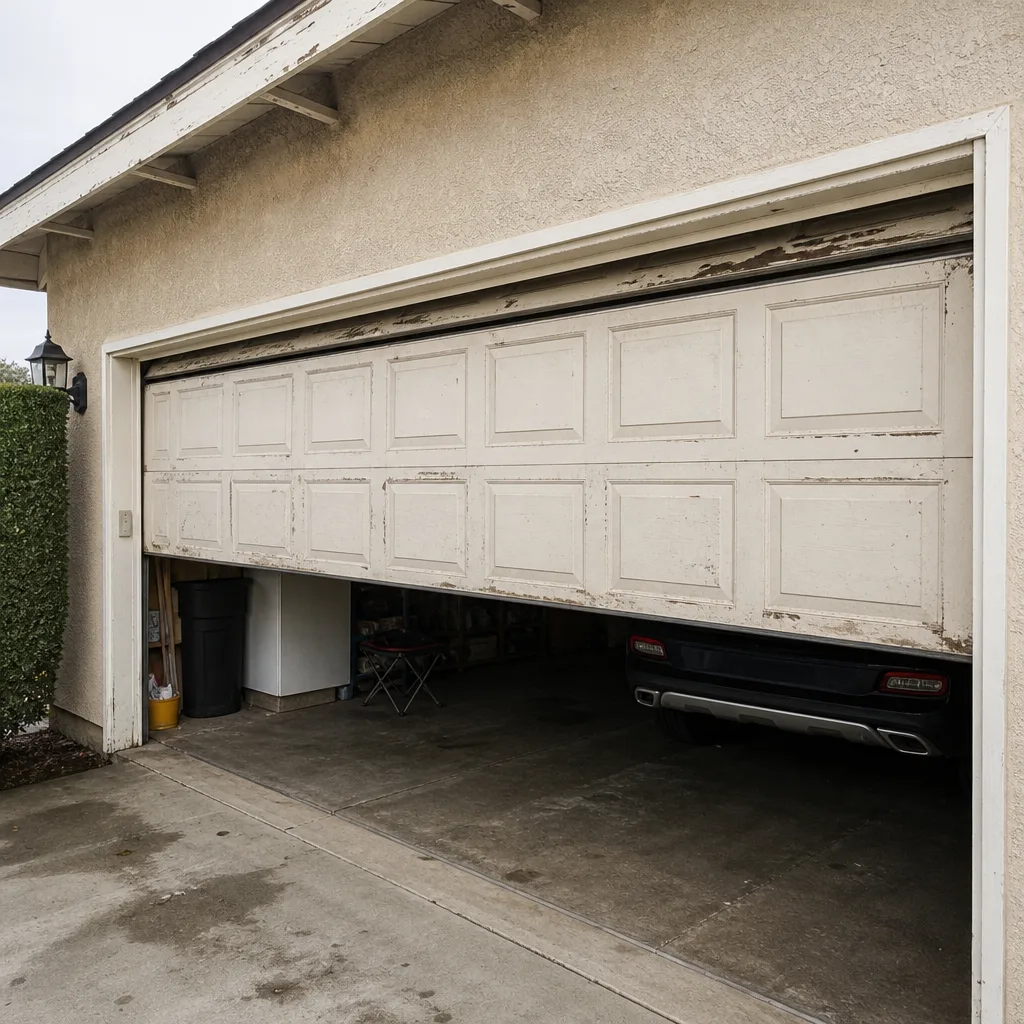 Before
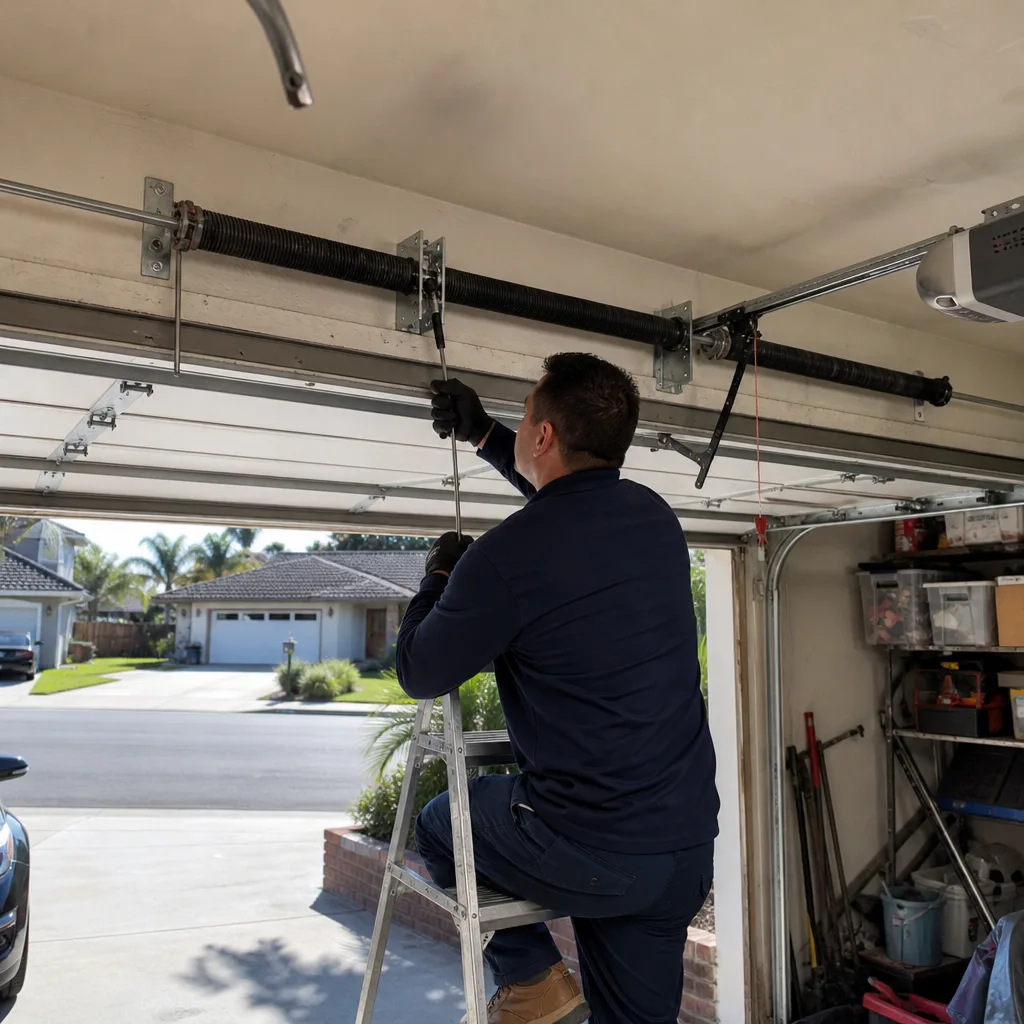 After
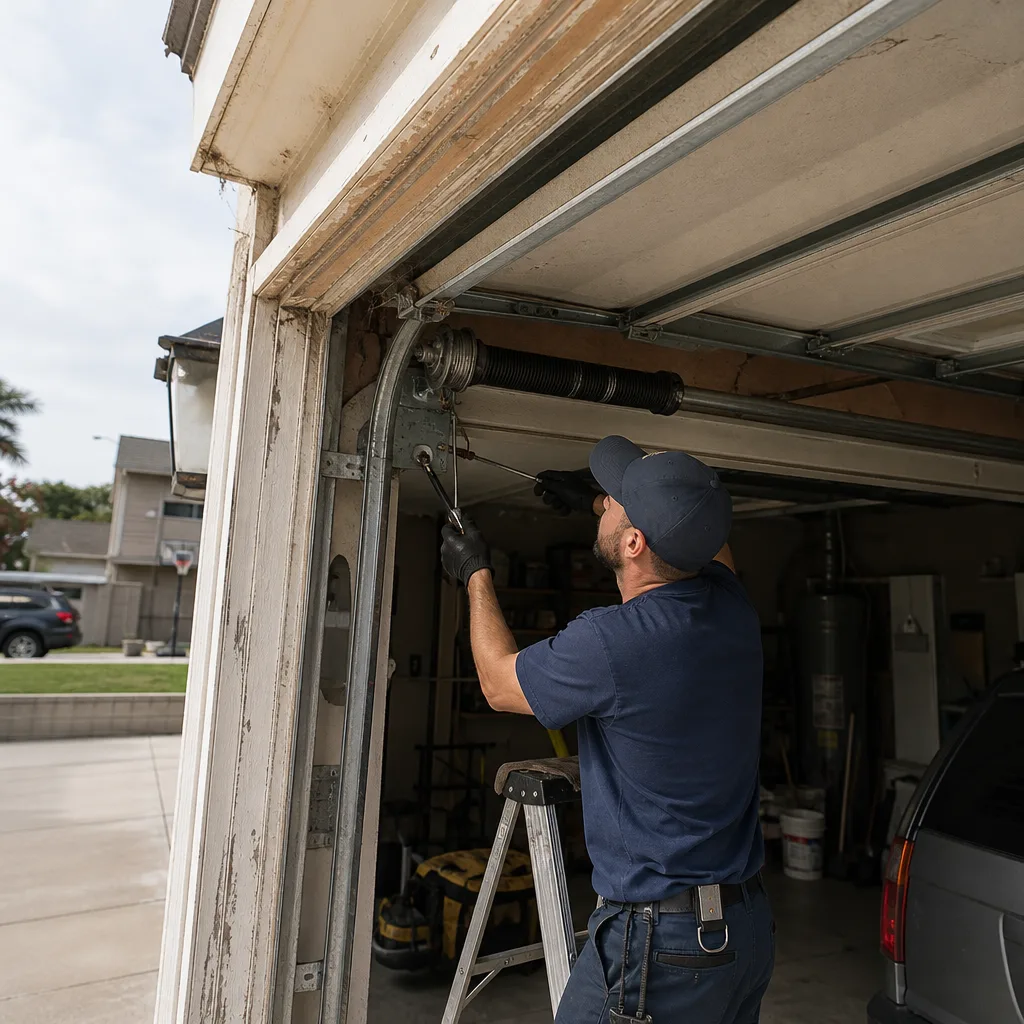 Before
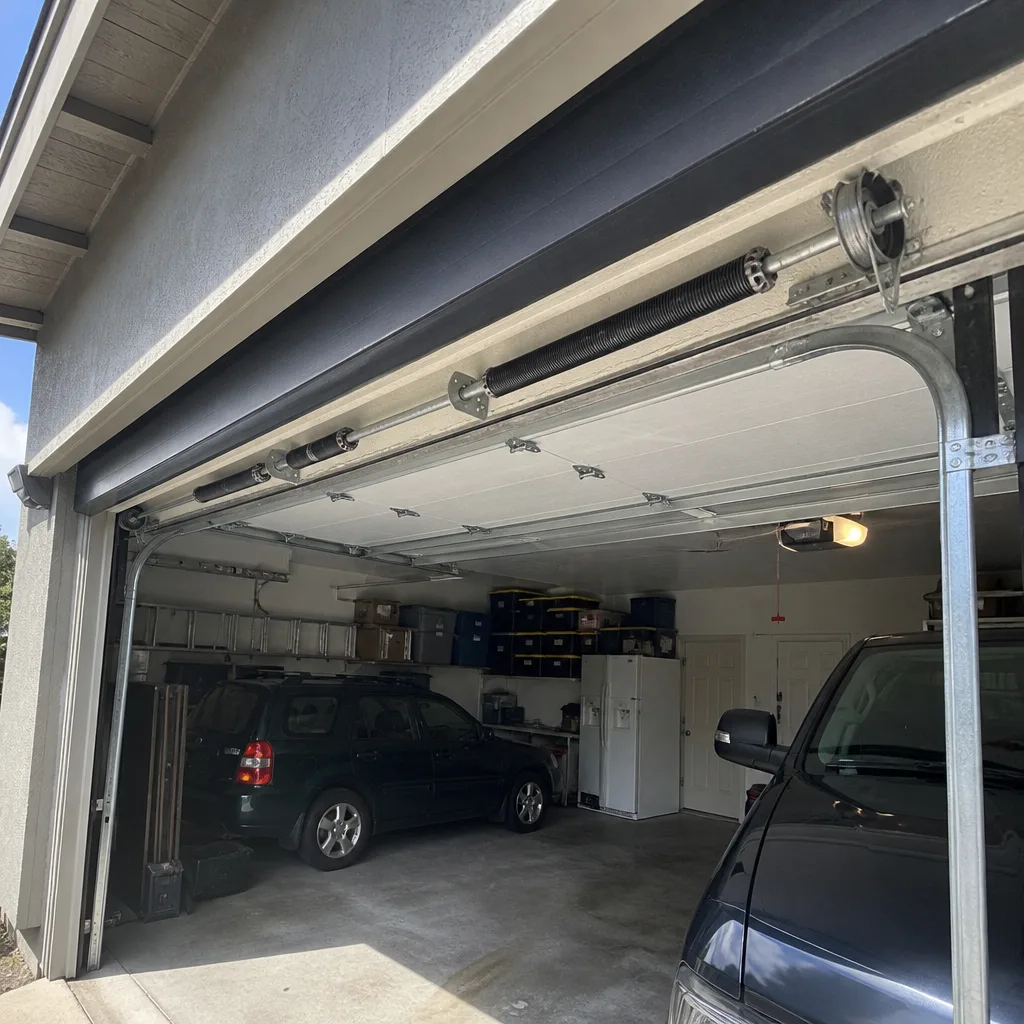 After
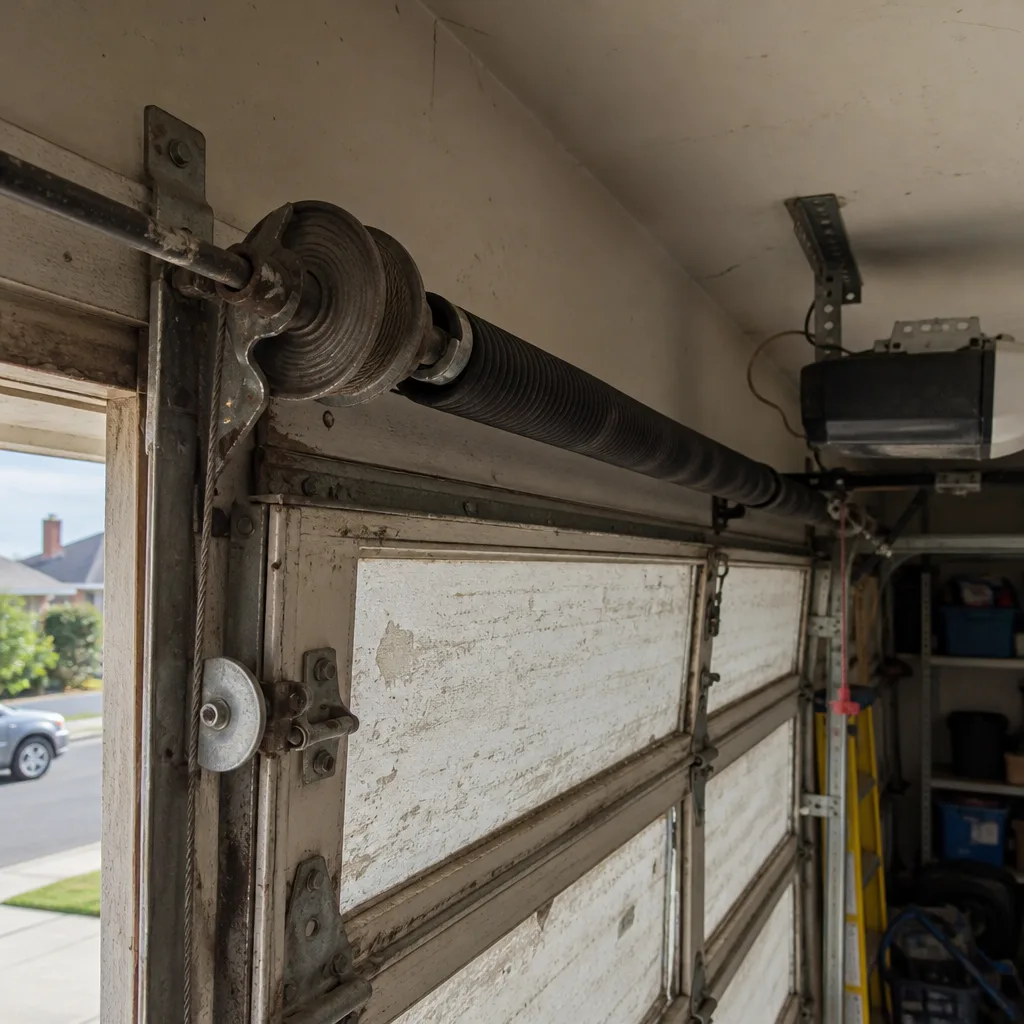 Before
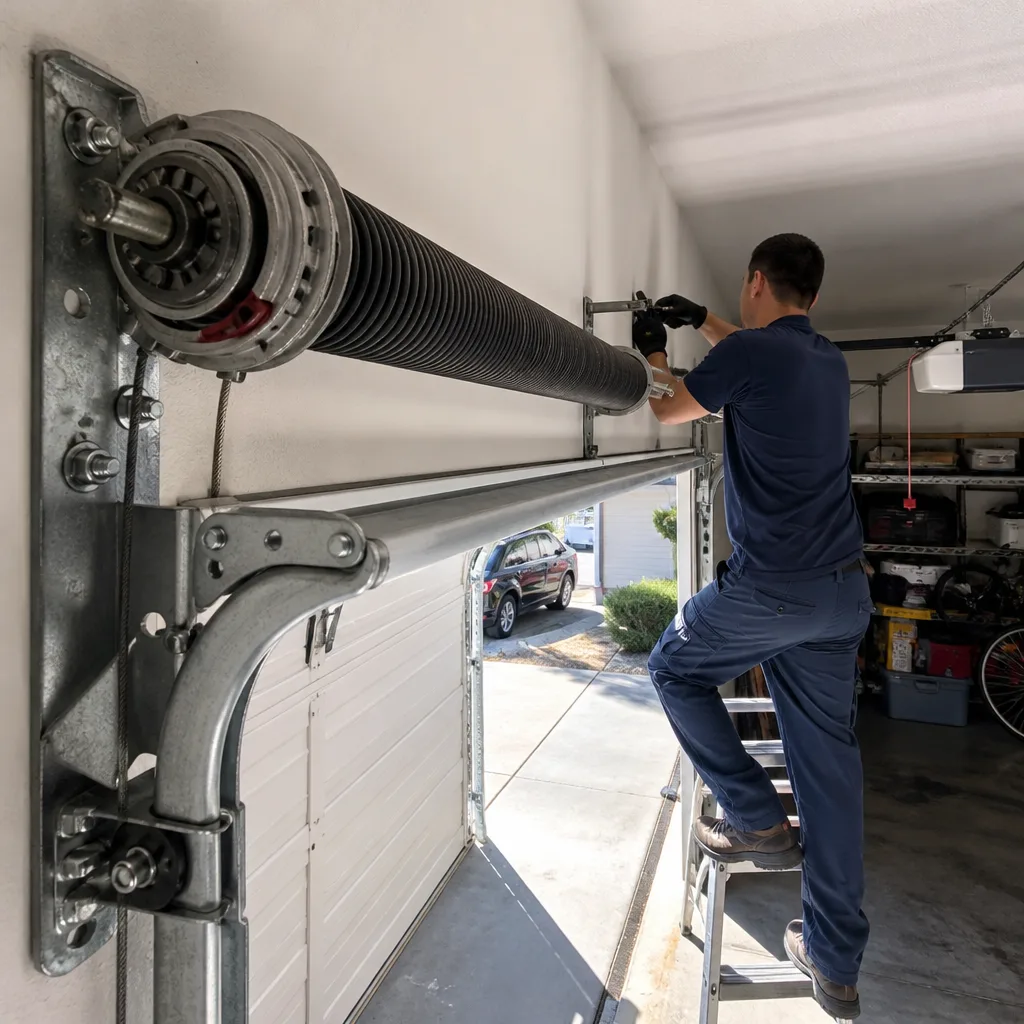 After
When to Call a Professional
Some garage door problems announce themselves with noise and frustration. Others are silent, and identifying them requires trained eyes and ears on the equipment. Call a professional when the door makes a loud bang and won’t move, when the cables look frayed or slack, when the opener trips its breaker or the lights flash in an error pattern you don’t recognize, when a panel is dented by a vehicle strike and the tracks are bent, or when the door is visibly crooked in the opening. These situations involve tension, electricity, or structural alignment, and a wrong move can cause serious injury or expensive collateral damage. Garage door repair in Huntington Beach is what we focus on every day, and the diagnosis is free. Driveway Garage Door Repair offers free estimates in Huntington Beach – call (866) 253-0630 and one of our technicians will assess the door, the opener, and the tracks before recommending anything.
Frequently Asked Questions
Most our Garage Door Repair services in Huntington Beach fall between $120 and $450 depending on the failed component. A snapped torsion spring replacement typically costs $180 to $420, a new set of rollers runs $100 to $180, and opener circuit board repair starts around $150. The price is always quoted and agreed before any work starts. Call (866) 253-0630 for a free estimate on your specific door.
Most repairs are completed the same day, especially spring replacements and sensor realignment. Parts for LiftMaster, Chamberlain, Craftsman, and other major brands travel with our technicians on the truck, so there’s no waiting on a warehouse order for common failures.
No. The quote we give before starting work is the price you pay. If we find additional issues during the repair, we stop and show you what we found, with a revised price, before doing any extra work. You approve every dollar before it’s spent.
For a like-for-like replacement of an existing sectional door using the same opening, no permit is required; see The Complete Guide to Garage Door in Huntington Beach for full details. If you’re widening the opening, changing the header, or converting the garage, a permit from the Huntington Beach Building Division is required. HOA rules may be stricter in some communities.
Intermittent operation is usually a humidity-related circuit board problem, a failing capacitor, or interference from an LED bulb in the opener. Marine layer moisture accelerates this failure pattern in Huntington Beach more than in inland cities. A diagnostic check can pinpoint which of the three is causing your specific problem.
In many cases, yes, especially for LiftMaster and Chamberlain units where replacement boards and gears are available at reasonable prices. A new opener costs $350 to $650 installed. A $150 board replacement extends the life of your existing unit by several years. The right answer depends on the specific failure point; browse more guides & resources for help deciding.
The Bottom Line
Huntington Beach garage doors face a set of environmental stressors that inland doors never encounter. Salt air corrodes springs and hardware faster than the national average. UV rays bake weatherstripping into brittleness. Marine humidity strains openers and wood panels. The result is that a symptom in Huntington Beach often traces back to a coastal-specific cause, and knowing the difference determines whether you spend $30 or $500. The diagnostic framework in this guide is designed to get you to the right answer quickly, using your ears, eyes, and a few minutes of attention. For everything beyond safe DIY maintenance, make sure you work with a specialist who knows the brands in your garage and quotes pricing before any work begins, whether it’s the door, the opener, or a full replacement. We work on the brand you already have, and we serve the entire Huntington Beach community from repair through installation. Driveway Garage Door Repair home is your starting point for all three service categories. If you’re deciding between repair and replacement, review our garage door installation in Huntington Beach options. For opener-specific issues, see our garage door opener repair page. When the door itself won’t move, our garage door repair page walks through the symptoms and solutions.
Written by the team at Driveway Garage Door Repair, serving Huntington Beach since 2015.