
Last updated October 31, 2026
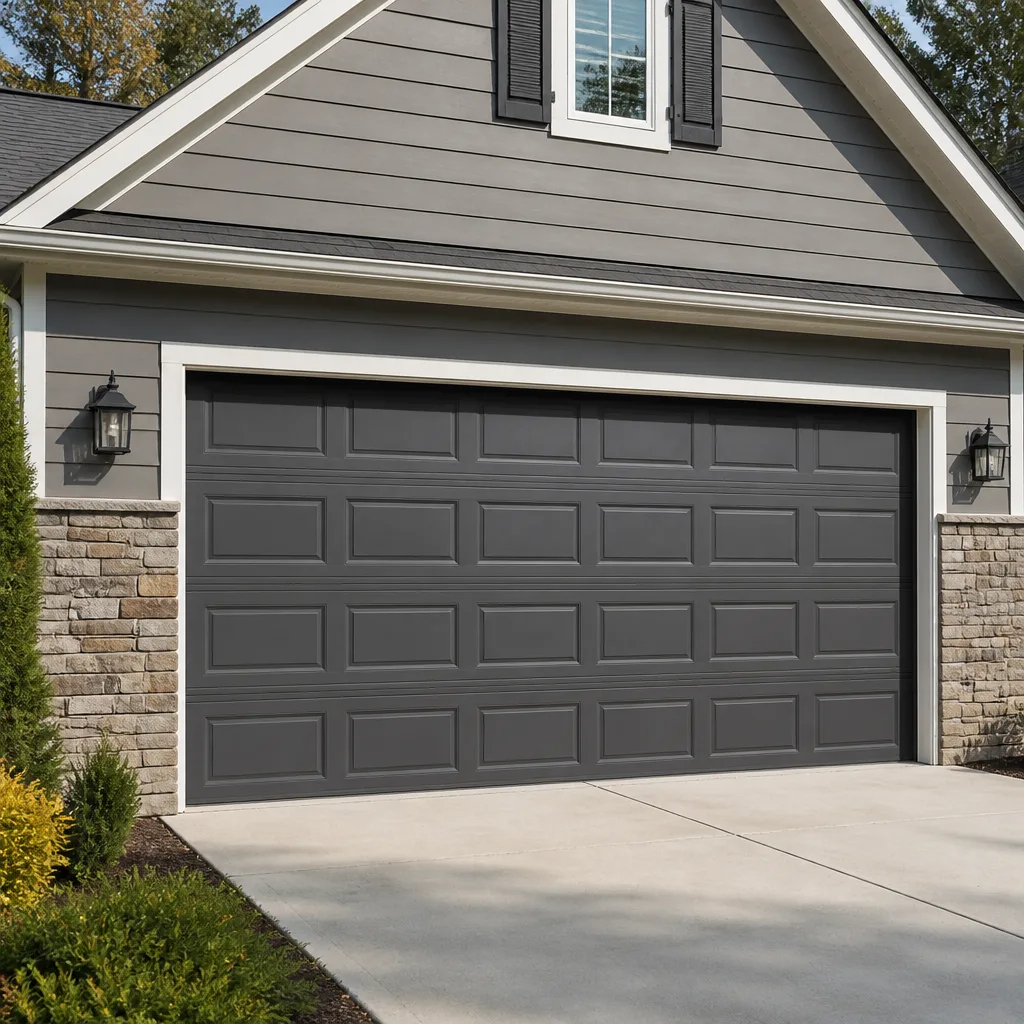 Raised-panel steel
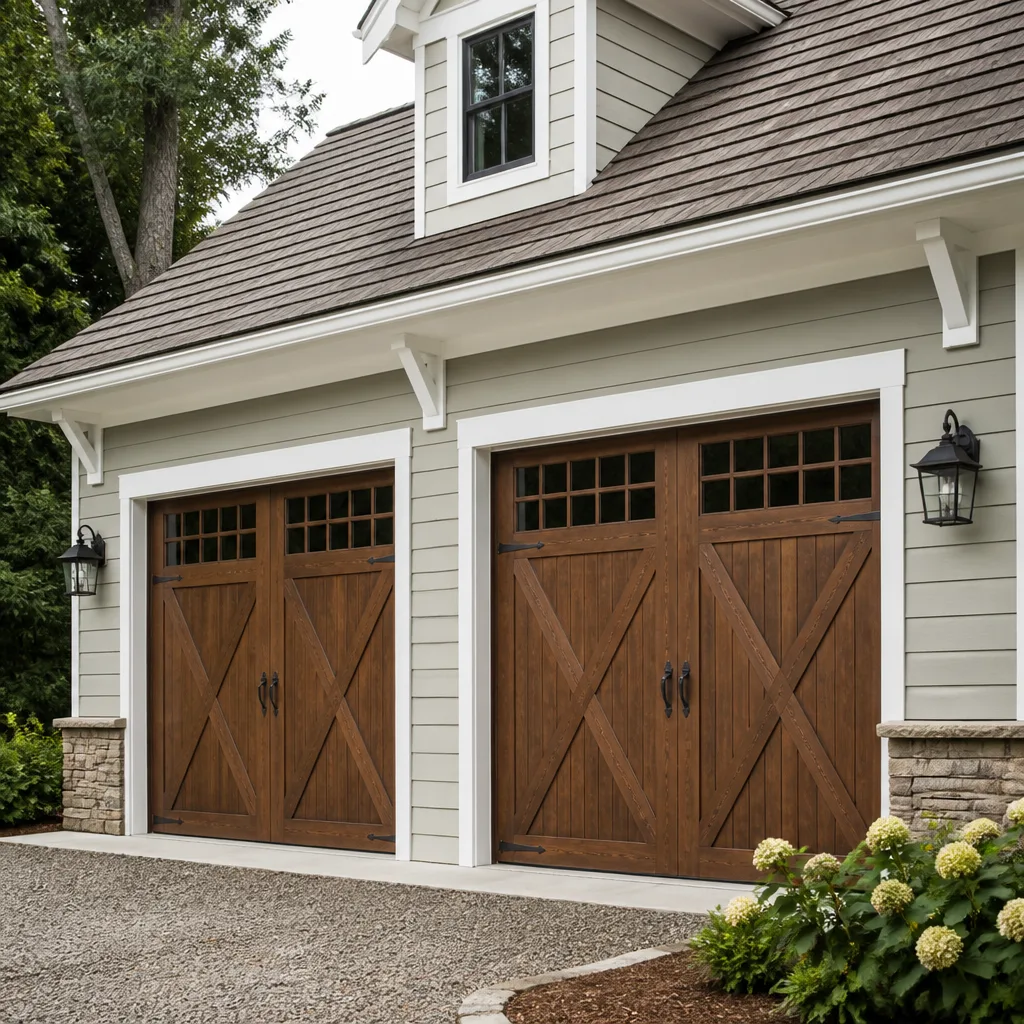 Carriage house
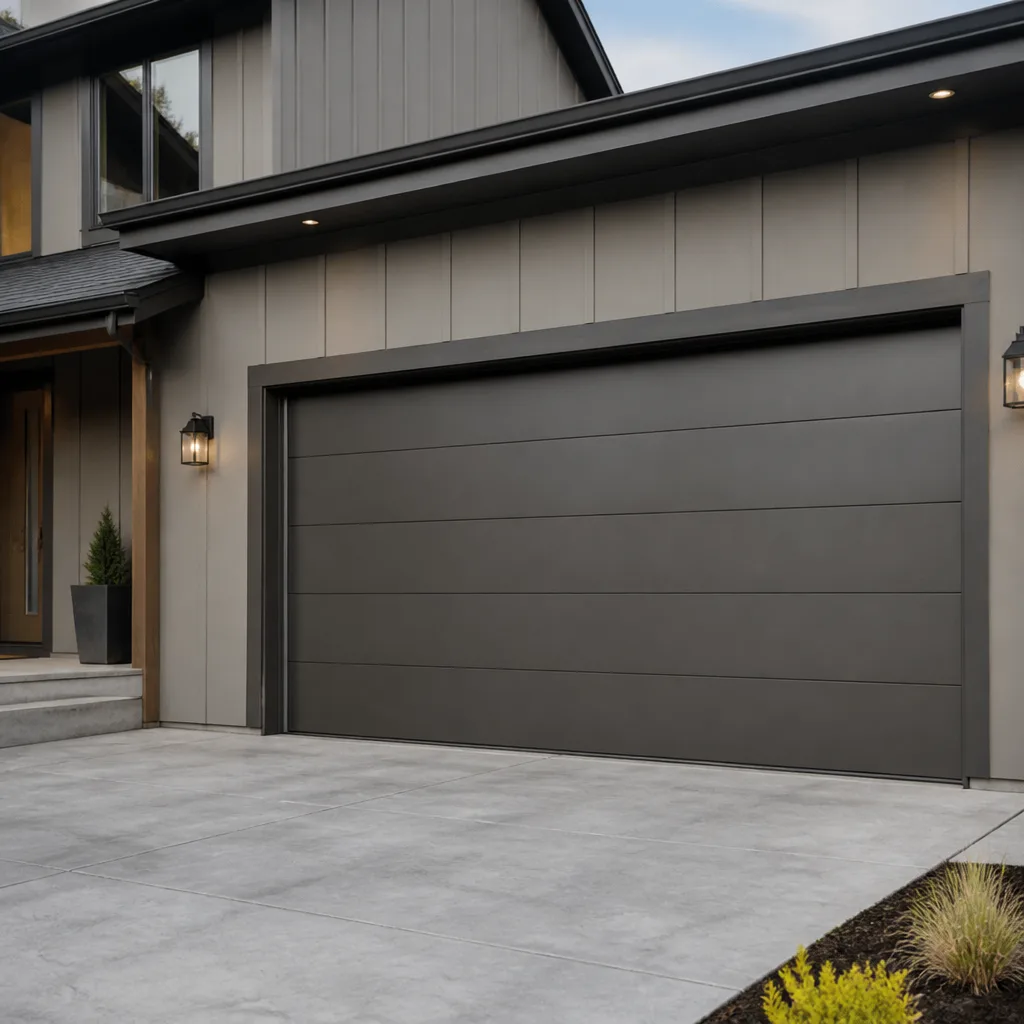 Modern flush
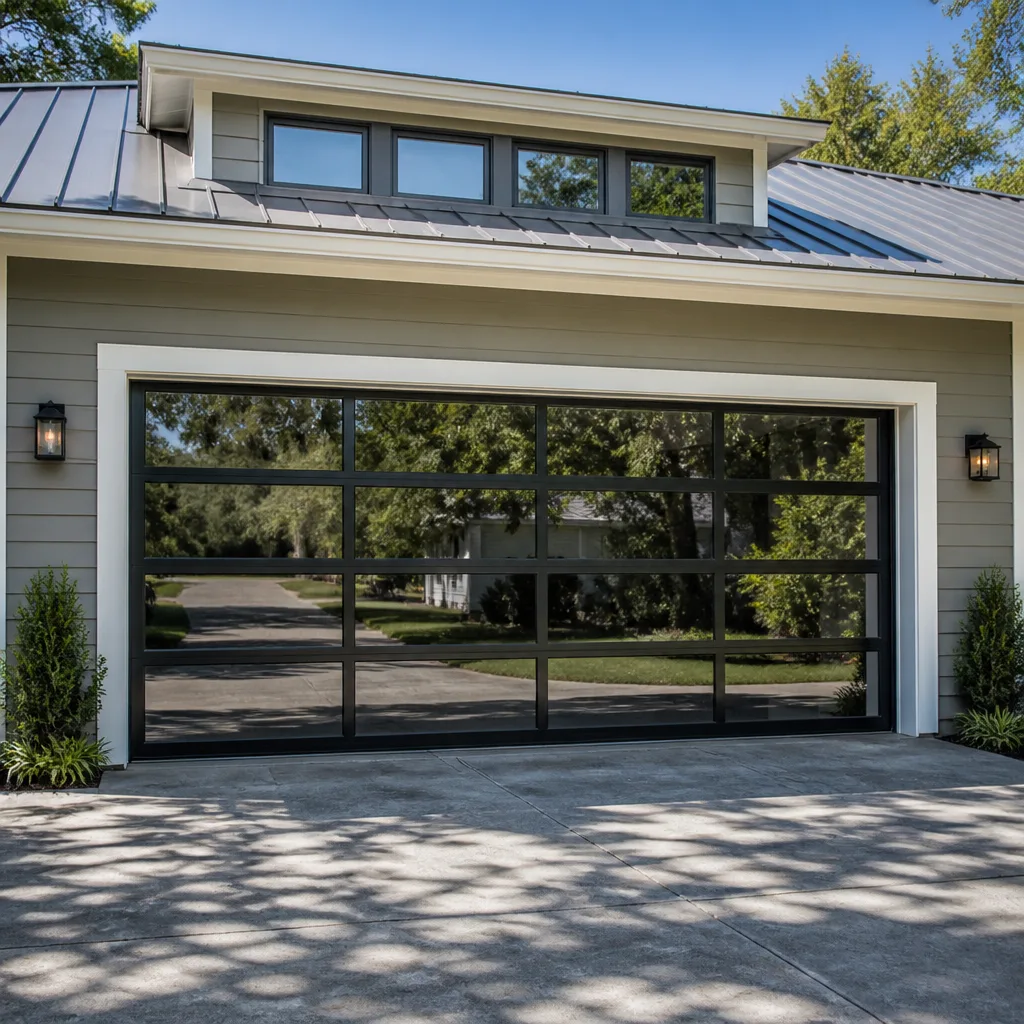 Full-view glass
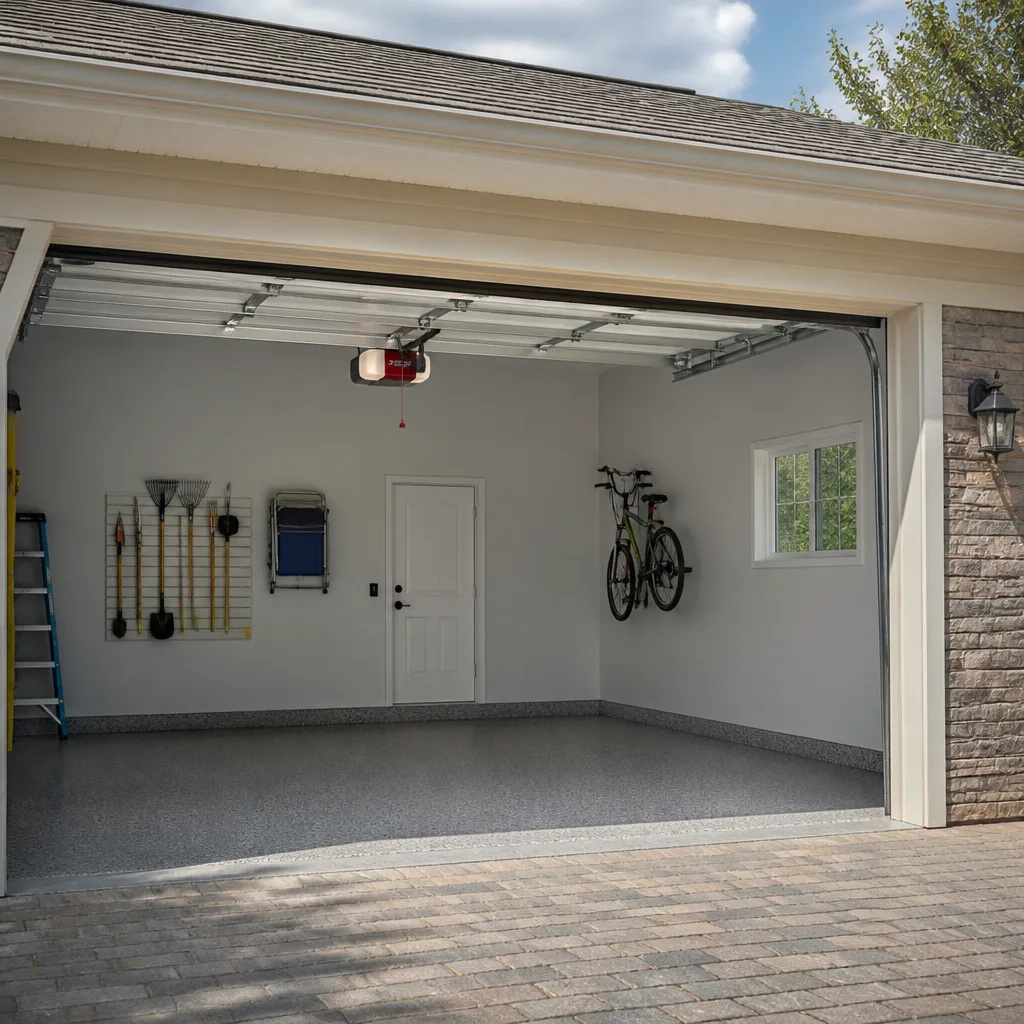 LiftMaster openers
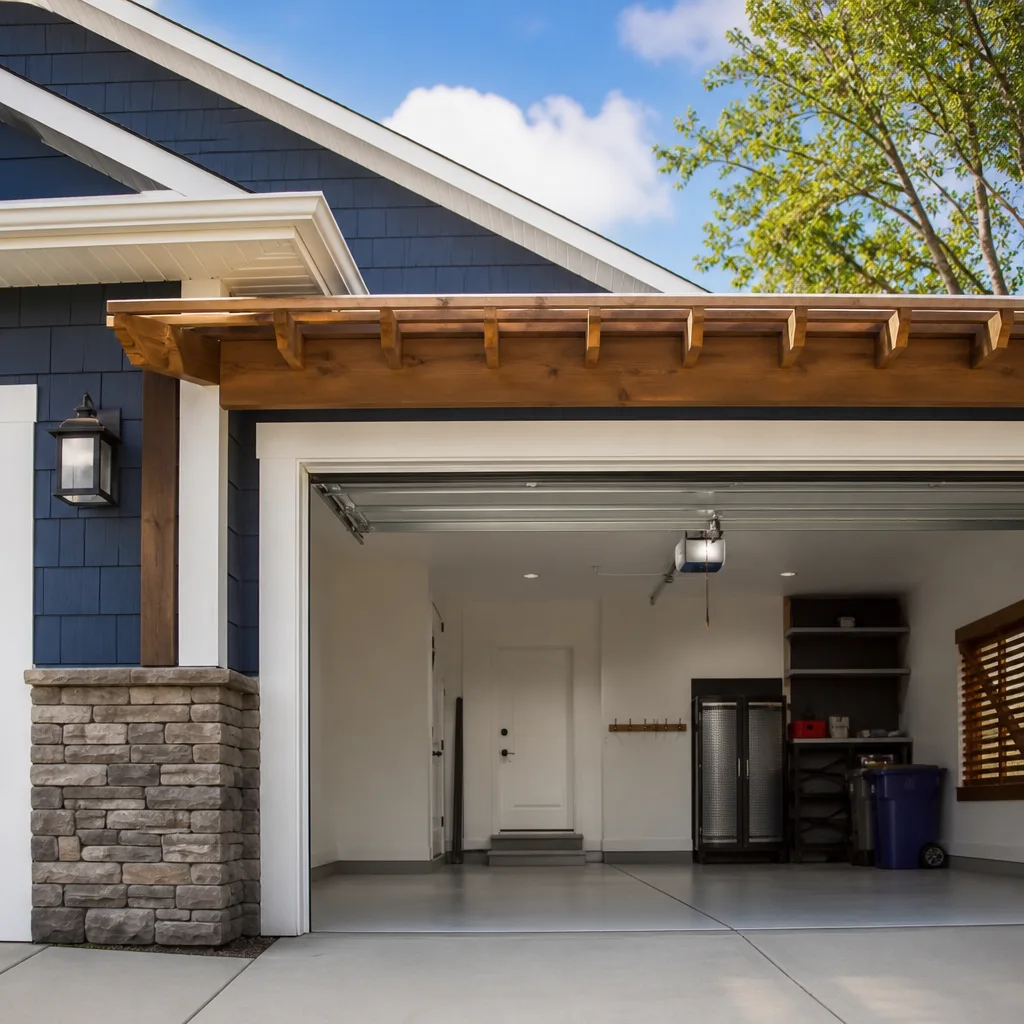 Chamberlain openers
Full 25-point door and opener safety check with every visit - springs, cables, rollers, tracks, and your LiftMaster or Chamberlain opener included
You get a price before we start. It does not change when the truck arrives.
Get your free estimateGarage Door Emergency Preparedness Guide for Huntington Beach Homes
In a power outage, including the kind that follow Southern California earthquakes or high-wind events, your garage door opener is inoperable unless you know how to use the manual release. That red cord hanging from the trolley is the single most important feature on your garage door system, and a surprising number of Huntington Beach homeowners either can’t find it in the dark or don’t know how to re-engage it after pulling it. This guide walks you through every emergency scenario we’ve seen across our years serving Huntington Beach garages, from broken springs trapping a car inside to post-earthquake track inspections, so you’re prepared before the next outage or equipment failure hits. For common problems and how to fix them, see our troubleshooting resource.
Quick Answer
Garage door emergencies in Huntington Beach fall into two buckets: mechanical failures like broken springs or snapped cables that strand a car, and event-driven situations like power outages or earthquakes where the door becomes a critical access point. The most important preparation is knowing how to use your manual release cord to operate the door by hand, and keeping a small emergency kit with a flashlight and the right lubricant within reach. Our garage door repair maintenance checklist for Huntington Beach homeowners covers what to inspect and when. After any seismic event or major windstorm, inspect the door and tracks before operating anything. If the door won’t move safely, call a garage door specialist rather than forcing it.
Styles & brands we work with
Table of Contents
- How to Manually Operate Your Garage Door During a Power Outage
- What to Do When a Spring Breaks With Your Car Trapped Inside
- Earthquake Preparedness for Huntington Beach Garage Doors
- The $40 Garage Door Emergency Kit Every Homeowner Should Keep
- Your Emergency Contact Sequence: What to Check Before You Call
- Same-Day Emergency vs. Next-Day Repair: How to Tell the Difference
- Common Mistakes to Avoid
- When to Call a Professional
- Frequently Asked Questions
How to Manually Operate Your Garage Door During a Power Outage
When the power goes out in Huntington Beach, whether from a rolling blackout during a heat wave or a Santa Ana wind event knocking down lines, your garage door opener becomes inert. The motor won’t run, the remote does nothing, and the wall button is dead. But the door itself is still perfectly operable by hand, provided you know the sequence and the door’s springs are intact.
Here’s the step-by-step procedure we recommend to every Huntington Beach homeowner:
- Locate the red emergency release cord. It hangs from the trolley attached to the rail above your car. On LiftMaster and Chamberlain openers, it’s a red handle that pulls down. On Genie openers, the release is typically red or orange. Don’t pull it yet.
- Confirm the door is fully closed. If the door is open when the power fails, do not pull the release. A door that isn’t under spring tension can drop hard, and that’s how people get hurt. If the door is partially open, wait until it’s either fully open or fully closed before disengaging.
- Pull the release cord straight down. One firm pull disconnects the trolley from the opener carriage. You’ll hear a click. The door is now in manual mode.
- Lift the door by hand. A properly balanced door with functional springs should lift smoothly with about 10 to 15 pounds of force. If it feels heavy or won’t stay up, stop. That indicates a spring problem, which means a different response, covered in the next section.
- Open or close the door fully and leave it in position. Manual operation is for moving the car in or out, not for leaving the door half-open. A half-open door is a security risk and causes uneven spring wear.
- Re-engage the opener when power returns. Pull the release cord down and toward the door, or on most LiftMaster and Chamberlain openers, simply press the wall button. The trolley will travel and re-connect automatically on the next cycle. On some Genie models, pull the cord down and back until it locks in place.
In Huntington Beach’s coastal climate, corrosion on the manual release mechanism is a real issue. The salt air that makes our oceanfront neighborhoods like Sunset Beach and the Harbour so desirable also accelerates rust on metal hardware. Test your release cord twice a year by pulling it and re-engaging it. If it’s stiff, the mechanism likely needs lubrication or replacement. A frozen release cord in a power outage is a problem you don’t want to discover at 6 a.m. with a car stuck in the garage.
What to Do When a Spring Breaks With Your Car Trapped Inside
A broken torsion spring sounds like a gunshot. We’ve had Huntington Beach homeowners describe it as a car backfiring inside the garage, a firecracker, or a hammer hitting concrete. The sound is abrupt and loud, and it’s one of the most common garage door emergencies we respond to across the city, from Downtown Huntington Beach to the tracts near Golden West College.
Here’s what that loud bang means in practical terms: your door’s springs do the heavy lifting, not the opener. When a spring breaks, your door becomes a dead weight, typically 150 to 350 pounds depending on the door size and material. Your opener is not designed to lift that dead weight, and trying to operate the door anyway will strip the opener’s gears within seconds.
If your car is trapped inside the garage when the spring breaks, follow this sequence:
- Do not press the opener button. Not the remote, not the wall button, not the app. Every attempt to run the opener with a broken spring grinds gears and converts a spring repair into a spring repair plus an opener replacement.
- Determine if the door can be lifted manually. In some cases, with a single spring on a double-spring system, there’s enough residual tension to manually lift the door. Pull the red release cord, then attempt to lift the door by hand with your legs, not your back. If the door moves with reasonable effort and stays up, get the car out and leave the door closed.
- If the door won’t lift or feels dangerously heavy, do not force it. A dead door with zero spring tension is heavier than most people can safely manage, and it can slam shut with enough force to injure someone or damage the vehicle. This is a call-for-help situation.
- Use your front door and call a garage door specialist. If the car can’t be freed safely, the right move is to get a professional on the phone. A broken spring typically requires a same-day service call, and most Huntington Beach garage door companies, including our team, prioritize spring failures because a garage that can’t be opened or closed is both a mobility problem and a security problem.
A note on spring types: the residential doors across Huntington Beach include both torsion springs, which are mounted horizontally above the door opening, and extension springs, which stretch along the horizontal tracks. Torsion springs are far more common on homes built after the 1980s. Extension springs are more common on older beach cottages and townhomes in neighborhoods like the Royal Palm corridor.
Spring replacement is not a DIY job under any circumstances. Torsion springs are under several hundred pounds of tension, and the winding process without proper tools and training has caused severe injuries. This is one of those repairs where a professional is the only safe option.
Earthquake Preparedness for Huntington Beach Garage Doors
Huntington Beach sits in a seismically active zone, and every local homeowner lives with the reality that the next significant earthquake could come without warning. The garage door is one of the things most overlooked in earthquake preparedness, but it’s also the largest moving object in your home and one of your primary exit routes.
After an earthquake, your garage door may not look damaged, but that doesn’t mean it’s safe to operate. We’ve seen doors that looked fine from the outside but had jumped their tracks by a quarter inch, enough to bind the rollers against the track and send the door off the rails on the first open cycle.
Here’s the post-earthquake inspection sequence we recommend:
- Visually inspect the tracks from top to bottom. Look for gaps between the rollers and the track, bends, or separation between the track sections. Any visible distortion means the door should stay closed until a professional can assess it.
- Check the spring system. Look above the door at the torsion tube or the extension springs. If a spring is broken, you’ll see a visible gap in the coil or a dangling spring. If it’s broken, treat it as a trapped-car emergency as described above.
- Test the manual balance. Pull the emergency release, then lift the door by hand about three feet and let go. It should stay approximately in place. If it drops or slams upward, the spring tension has changed and needs adjustment.
- Listen for new sounds during operation. If you decide to run the opener, stand clear of the door’s path and listen for grinding, popping, or scraping. Any unusual noise means stop and inspect more closely.
- Check the safety sensors. Earthquake movement can shift the sensor brackets at the bottom of the track, so the photo-eye beams no longer align. An opener that refuses to close and flashes a light is often a sensor alignment issue, not a motor problem.
Current-model openers from brands like Genie and LiftMaster include seismic disconnect features in some configurations. These are designed to release the door from the opener in a seismic event, preventing the opener rail from being torn from the ceiling when the building flexes. If your opener has this feature, you’ll see a small chain or cable that acts as a secondary release. Check your opener’s manual for how to reset it after activation.
Huntington Beach’s mixed housing stock means preparation looks different from neighborhood to neighborhood. Older homes in the numbered streets near the beach often have wooden doors with single-spring systems and decades of wear. The master-planned communities farther inland, like Seacliff and Edwards Hill, tend to have newer steel doors with double springs and modern openers. The preparation is the same, but older systems need more frequent inspection.
The $40 Garage Door Emergency Kit Every Homeowner Should Keep
Most Huntington Beach homeowners keep a household emergency kit with water, batteries, and a first aid kit. Almost none keep a garage door emergency kit, and that’s the gap this section fills. For about $40, you can assemble everything you need to handle the most common garage door emergencies safely and without scrambling in the dark.
Here’s the kit, assembled in your garage within arm’s reach of the door:
- LED flashlight with fresh batteries. When the power is out at night, the manual release cord is nearly impossible to find by touch alone. Get a flashlight with a magnetic base so you can stick it to the track while you work with both hands.
- Garage door lubricant, not WD-40. Use a lithium-based or silicone-based garage door lubricant. WD-40 is a solvent, not a lubricant, and it will strip the existing lubrication from your rollers and hinges. Clopay and Amarr both specify their recommended lubricants, and a general-purpose lithium spray works across all brands. A can costs about $8.
- A rubber wedge or wheel chock. In a broken spring situation where the door needs to stay open to get a car out, a wedge can hold the door in the raised position temporarily. Never rely on the opener to hold a door with broken springs; the wedge is a safety backup.
- A printed copy of your opener’s emergency release instructions. Yes, it’s in the manual, and yes, the manual is in a drawer somewhere inside the house where you can’t find it when the power is out. Print the manual release and re-engagement pages, put them in a zip-top bag, and tape the bag to the wall beside the door. Include your opener’s brand and model number on the sheet.
- A work glove. A single leather or heavy-duty work glove protects your hand when pulling the release cord or lifting a door edge. One glove is enough; a pair is better.
The total cost for all five items is roughly $35 to $45 at any Huntington Beach hardware store, and the flashlight and lubricant serve double duty for regular garage maintenance. We’ve responded to emergency calls in neighborhoods all across the city, from Huntington Harbour to the Inland Island, where the homeowner simply couldn’t find the release cord in a dark garage. A $10 flashlight solves that before it becomes an emergency.
Your Emergency Contact Sequence: What to Check Before You Call
When a garage door emergency happens in Huntington Beach, the instinct is to call for help immediately. That’s not wrong, but a few minutes of checking first can save you a service call fee for a problem you can solve yourself, or can give the technician the information they need to arrive with the right parts. See Garage Door Permits, Codes & Inspections in CA: What You Need to Know for regulatory context on major repairs.
Before you pick up the phone, run through this checklist:
- Confirm the power is on in the garage. Check the garage light or an outlet with a phone charger. In Huntington Beach, especially during summer heat waves, circuit breakers trip more often than people think. Reset the garage circuit breaker if needed and test the opener again.
- Check the opener’s lock mode. Most modern openers, including Chamberlain and LiftMaster models, have a lock function that disables remote controls but leaves the wall button functional. If the remote does nothing but the wall button works, the lock mode is on. Hold the lock button for three seconds to disable it.
- Check the safety sensors. If the door closes partway and reverses, the photo-eye sensors are likely misaligned or blocked. Look for the small LED lights on each sensor. If one is off or blinking, adjust the sensor until the light is steady. This is a five-minute fix that solves a surprising number of service calls.
- Visually inspect the springs. Stand inside the garage and look up. If a torsion spring has a visible gap in the coil, it’s broken. This is a call-for-help situation, not a DIY fix.
- Write down what you see and hear. Before calling, note the opener brand and model, what the door does or doesn’t do, any sounds, and whether the springs look intact. This information cuts diagnostic time in half when the technician arrives.
Huntington Beach’s housing density means most of our service calls are within a few miles of the shop. The information you gather before calling helps our team arrive with the right parts on the truck, which often means a same-visit fix instead of a diagnose-then-return appointment. When you call, tell us the brand of opener and door you have, for example, a Genie opener on a Wayne Dalton door, or a LiftMaster opener on a Clopay door. That brand information alone tells us a lot about what we’re likely to find.
Same-Day Emergency vs. Next-Day Repair: How to Tell the Difference
Not every garage door problem is an emergency, and knowing the difference can save you money and help you explain the situation accurately when you call a Huntington Beach garage door company. We categorize calls into three tiers:
True emergencies, same-day priority:
- Broken spring with a car trapped inside the garage
- Door that won’t close, leaving the garage and home unsecured overnight
- Door that fell off its tracks, blocking the driveway or creating a safety hazard
- Door that won’t open, and the garage is the only exit for the vehicles
- Opener that runs the door into the ground or into the stop with force, indicating a limit switch or logic board failure
Urgent, but not emergency, target 24-48 hour service:
- Broken spring on a detached garage or a rarely used third-car door
- Door that opens and closes but makes loud grinding or popping sounds
- Opener remote that stops working when the wall button still functions
- Sensor misalignment that prevents the door from closing, but you can lock the door manually with a slide bolt
Non-urgent, schedule at your convenience:
- Cosmetic door damage like dents or peeling finish
- Weatherstrip replacement on the garage door bottom seal
- Roller replacement on a door that still operates smoothly
- Opener upgrade or replacement on a functioning but older system
- Preventative maintenance and spring inspection
In Huntington Beach, the coastal moisture plays a role in the urgency equation. A door that’s sticking or binding during the dry season may fail completely during the winter rain months when moisture swells the wood and rust accelerates on the hardware. If you’re noticing intermittent issues in November, address them before the December-to-March window when failures spike across the city.
Common Mistakes to Avoid
- Pulling the emergency release while the door is open. The release cord should only be pulled when the door is fully closed. Pulling it with the door open lets the door drop with full spring tension released, which can cause injury or damage. This is the most common mistake we hear about from Huntington Beach homeowners after an outage.
- Running the opener after a spring breaks. Every time you press the button, the opener’s gears grind against the dead weight of the door. One or two attempts can strip the gear and add a $200 to $400 opener repair to what was initially just a spring replacement.
- Using WD-40 or penetrating oil on rollers and hinges. These products are designed to dissolve rust and displace moisture, not to lubricate moving parts. They’ll strip the existing grease and leave the hardware running dry within weeks. Use a lithium or silicone garage door lubricant instead.
- Trying to replace a torsion spring with hand tools. This is the one that keeps us up at night. The springs on a typical Huntington Beach two-car garage door hold enough tension to break bones. Without a winding bar set and the right technique, this is a serious injury waiting to happen.
- Ignoring a sagging door on one side. If your door sits uneven when open, lifting higher on one side than the other, the spring tension is unequal or the cables are losing their seat on the drums. Left unaddressed, that imbalance gets worse and eventually results in a cable snap or a door off track.
- Failing to test the manual release before an emergency. The release cord is a mechanical component that can rust or seize, especially in the salt air of Huntington Beach neighborhoods closer to the coast. If you haven’t tested it in years, you won’t know it’s frozen until you’re standing in a dark garage during an outage.
- Calling a general handyman for garage door work. A handyman may be able to patch drywall or swap a faucet, but garage door systems are specific to the brand and the installation. The wrong spring size or cable length is a common outcome when someone without brand-specific knowledge attempts the repair. Garage doors are all we do, and for a reason.
When to Call a Professional
Some garage door tasks are genuinely safe to handle yourself: testing the manual release, lubricating the rollers and hinges, clearing debris from the tracks, and aligning the safety sensors. Others are not. Any repair involving springs, cables, or a door off its tracks should go to a trained technician, full stop. The tension in those components is what makes your door operable, and it’s also what makes them dangerous.
If your door won’t operate after an earthquake, if a spring has snapped, if the cables look frayed, or if the door came off its tracks entirely, call a professional. We service all major brands, including Genie, Clopay, Amarr, and Wayne Dalton equipment, and our team works on the door you already have rather than pushing a replacement you may not need. Driveway Garage Door Repair offers free estimates in Huntington Beach. Call (866) 253-0630 and we’ll walk through what you’re seeing, quote the repair, and get your door back in working order.
Frequently Asked Questions
Pull the red emergency release cord hanging from the trolley on your opener rail, then lift the door by hand using your legs. The release cord only works properly when the door is fully closed. If the door is open when the power goes out, leave it open and wait until power returns or call for service rather than attempting to close it manually.
Broken spring replacement in Huntington Beach typically runs between $180 and $340 including parts and labor, with the exact price depending on the spring size, the door weight, and whether it’s a single or double spring system. Torsion springs cost more than extension springs, and doors in coastal neighborhoods where corrosion is common may need additional hardware. Call (866) 253-0630 for an exact quote. Estimates are free.
For true emergencies like broken springs, doors that won’t close, and doors off track, a Huntington Beach garage door company can usually respond the same day. Non-emergency repairs like roller replacement or weatherstripping are typically scheduled within a few days. When you call, describe the problem and the brand of your door and opener so the technician can arrive with the right parts.
First, check the safety sensors at the base of the door track. Earthquake movement can shift the brackets so the photo-eye beams no longer align, and the opener will refuse to close as a safety default. If the sensors are aligned but the door still won’t close, inspect the tracks for bends or separation. A door that jumped its tracks should not be operated until a professional resets it.
No. Torsion springs are under several hundred pounds of tension, and the winding process requires specialized bars and a specific technique. Extension springs require cables that route under tension through pulleys. Both types cause serious injuries when improperly handled, and the cost of a professional replacement is far less than a hospital visit. This is one repair where a trained professional is the only safe option.
We work on the brand you already have, including Genie, Clopay, Amarr, Wayne Dalton, and the other major residential brands installed across Huntington Beach. Our technicians are trained on the specific release mechanisms, spring configurations, and opener logic boards for each brand, so we arrive knowing the quirks of your system rather than figuring it out on site.
The Bottom Line
Garage door emergencies in Huntington Beach don’t announce themselves. They’re the spring that snaps at 6:30 a.m. with your car in the garage, the power outage on a Santa Ana wind night when you can’t find the release cord in the dark, and the door that binds after an earthquake because the tracks shifted. Preparation is simple and costs about $40: a flashlight, the right lubricant, a wedge, and a printed copy of your release instructions. Test your manual release twice a year. Inspect your springs and tracks every season. And when something breaks that’s beyond safe handling, a garage door specialist gets you back in working order. If you need help, Driveway Garage Door Repair serves all of Huntington Beach, with garage door repair, opener repair, and full door installation. Call (866) 253-0630 for a free estimate.
Written by the team at Driveway Garage Door Repair, serving Huntington Beach since 2015. Explore more guides & resources on our blog.
See the difference
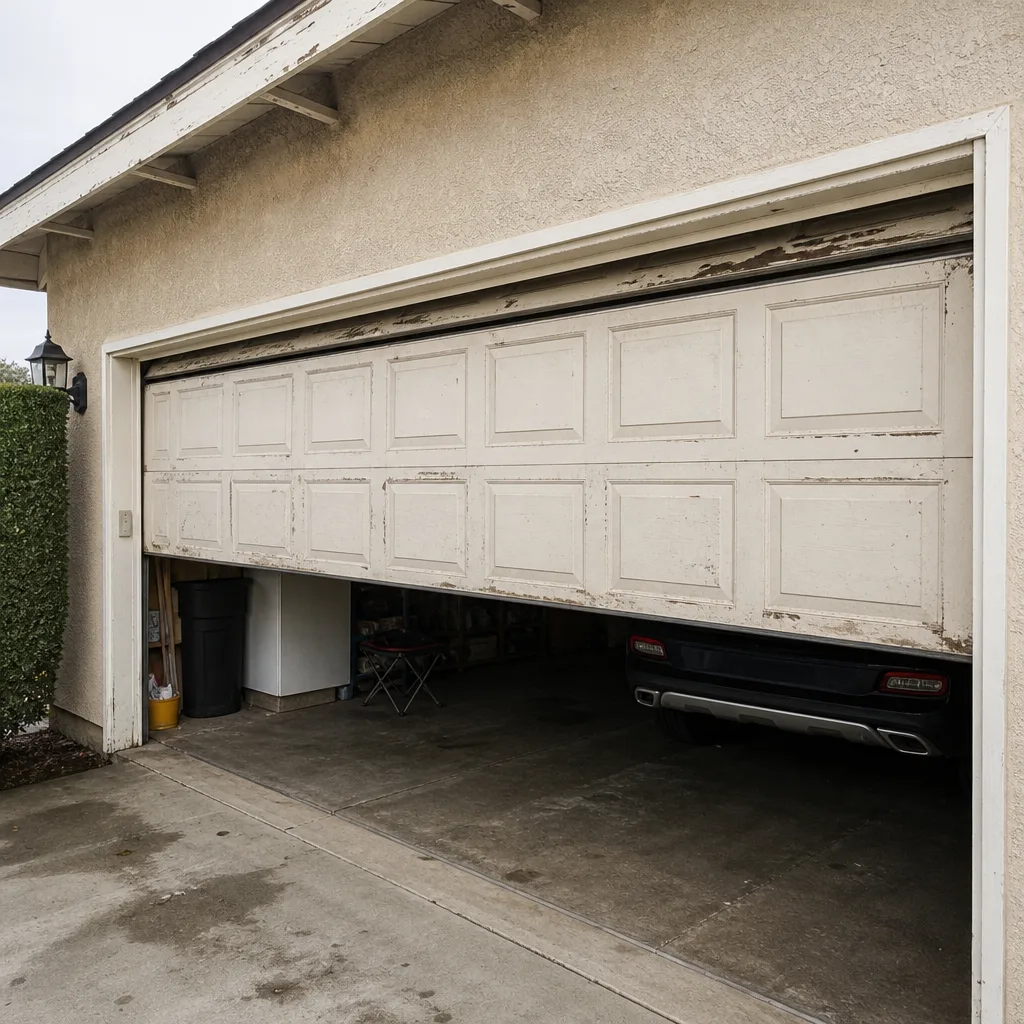 Before
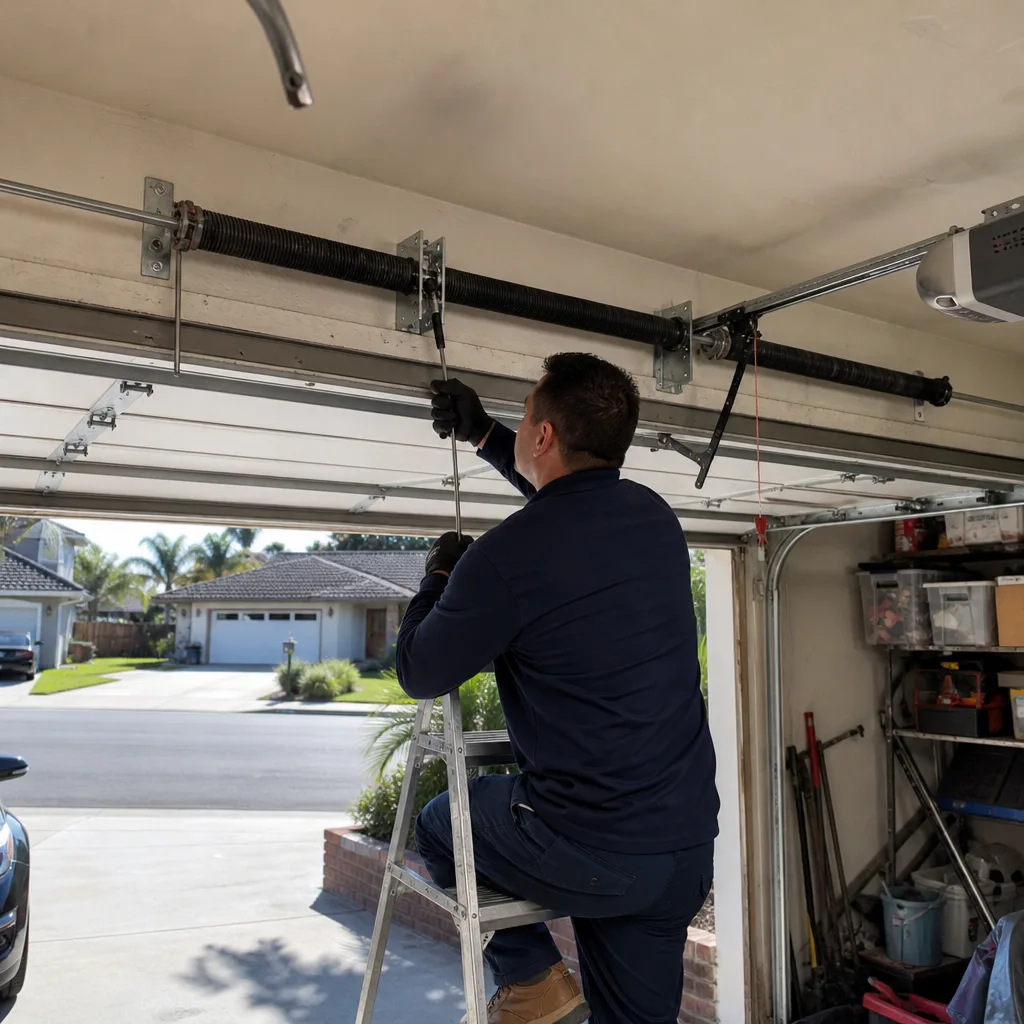 After
 Before
 After
 Before
 After