
Last updated October 31, 2026
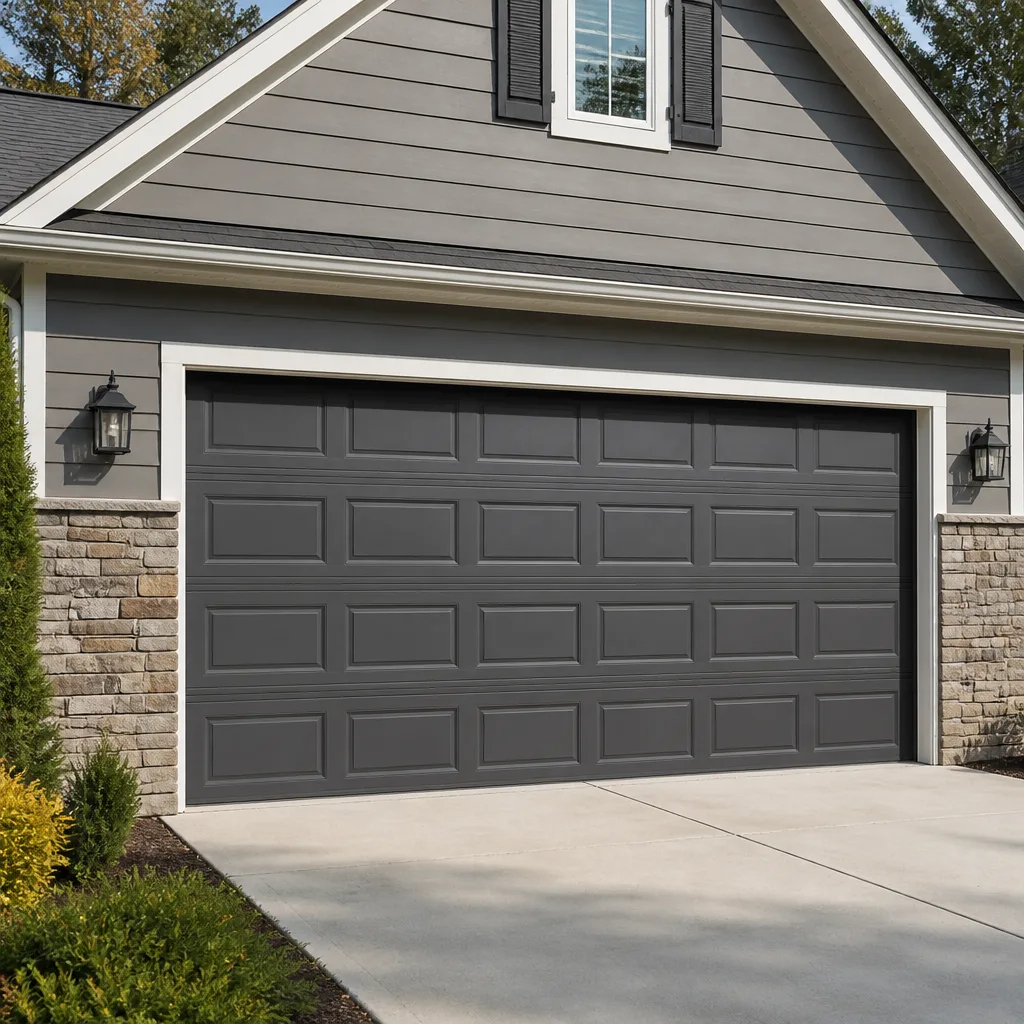 Raised-panel steel
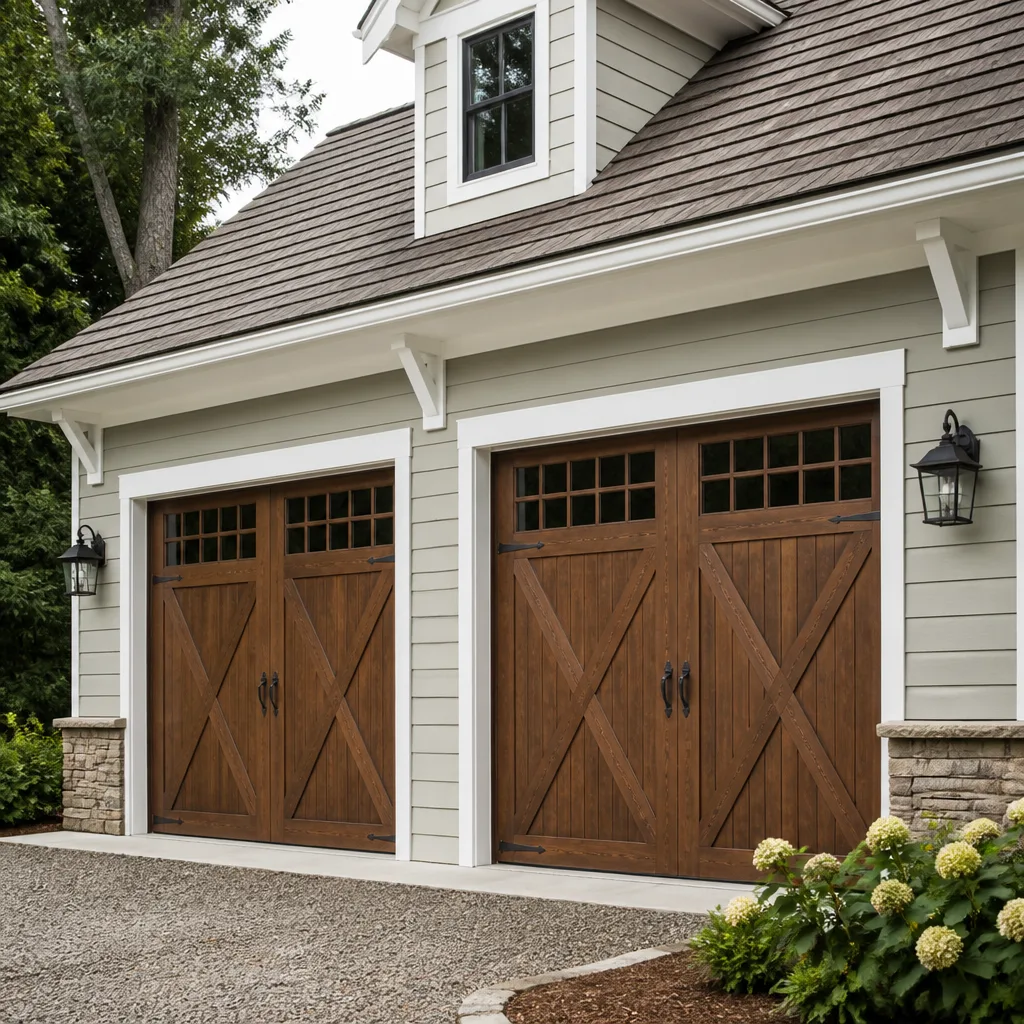 Carriage house
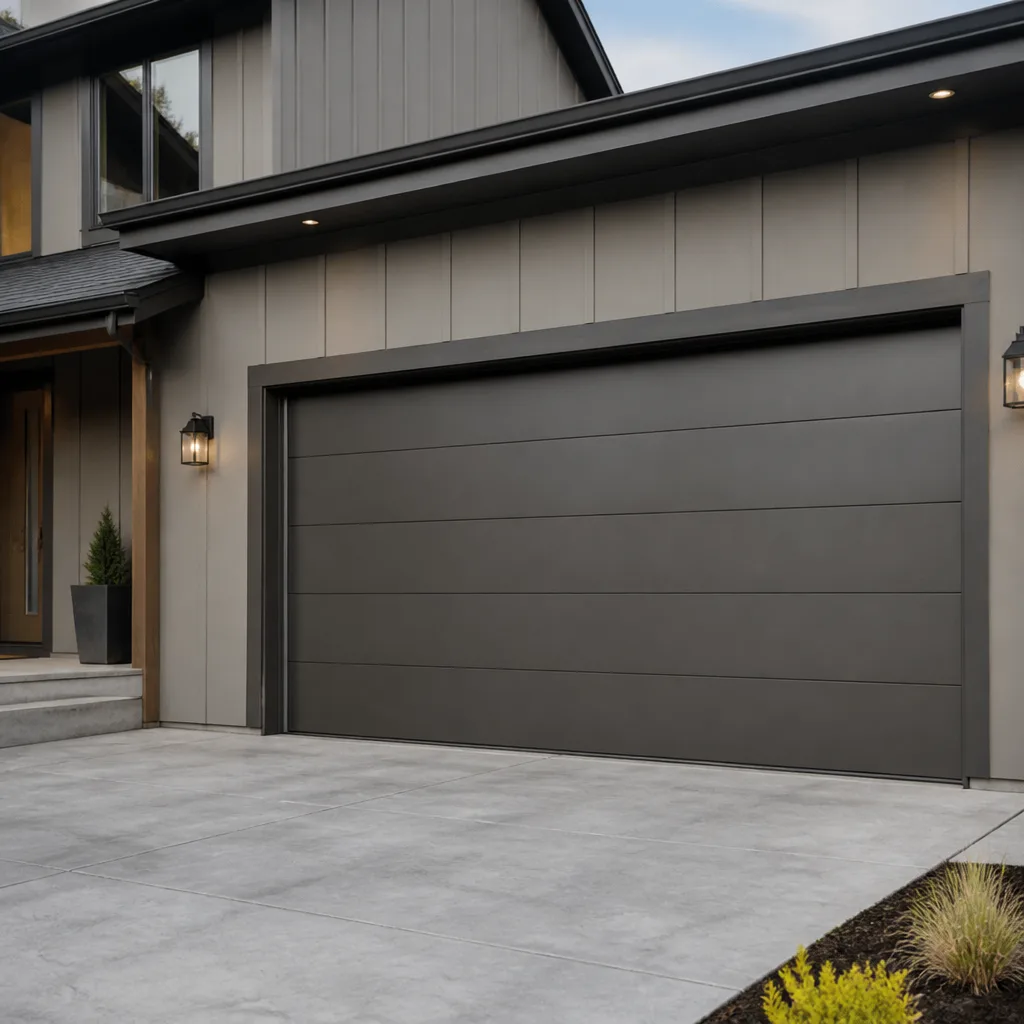 Modern flush
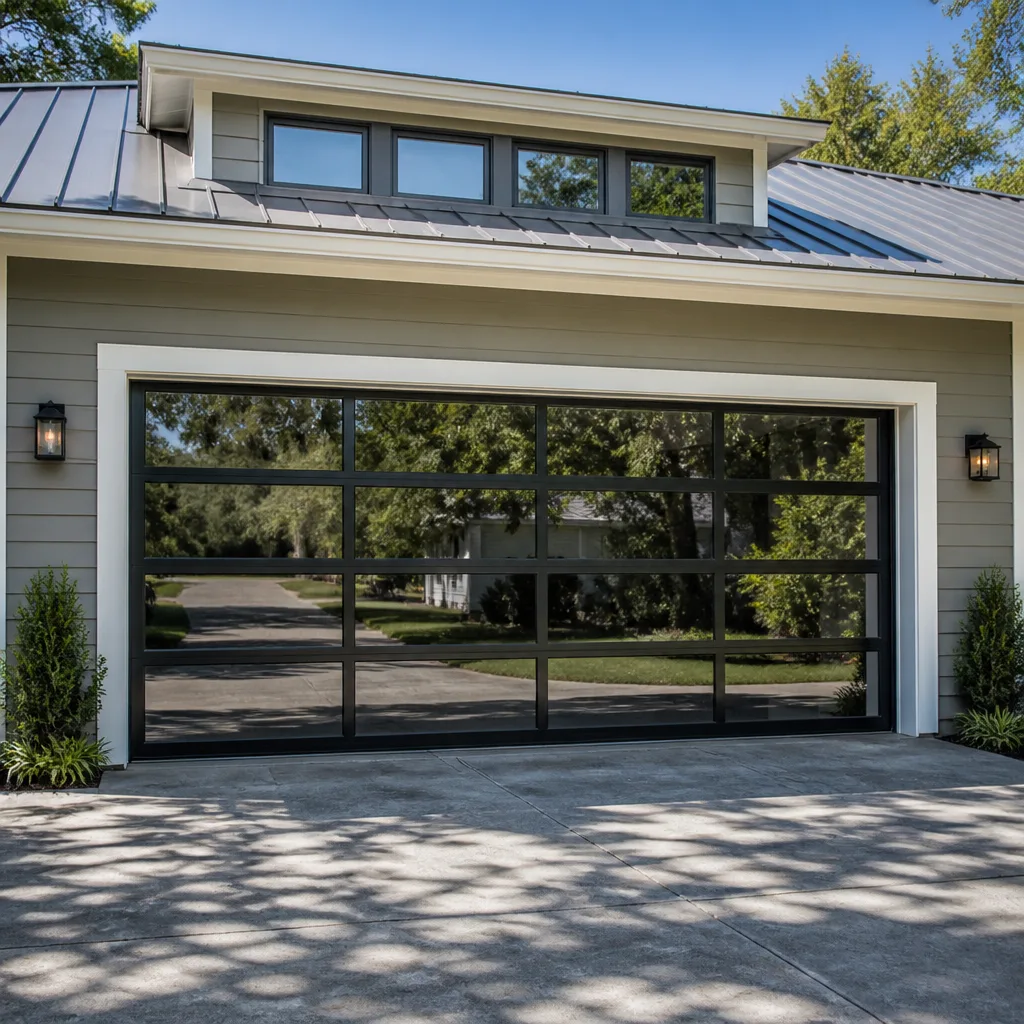 Full-view glass
 LiftMaster openers
 Chamberlain openers
Full 25-point door and opener safety check with every visit - springs, cables, rollers, tracks, and your LiftMaster or Chamberlain opener included
You get a price before we start. It does not change when the truck arrives.
Get your free estimateGarage Door Repair Maintenance Checklist for Huntington Beach Homeowners
Garage door springs in coastal climates can lose protective coating and begin surface corrosion in as little as 18 months. By the time you see visible rust, the fatigue process is already well underway. A maintenance check most Huntington Beach homeowners skip – running a dry cloth along the spring coil – will tell you more than visually inspecting the door from 10 feet away. This guide gives you a maintenance checklist built specifically for Huntington Beach conditions: salt air, marine layer humidity, and Santa Ana dust. For related reading, see our Garage Door Warning Signs: A Huntington Beach Homeowner’s Reference Guide. We’ll cover exactly what to inspect, how often, what products actually work, and which tasks are worth paying for.
Styles & brands we work with
Quick Answer
A garage door maintenance checklist for Huntington Beach should cover monthly visual inspections of cables and rollers, quarterly lubrication with a lithium-based or silicone spray (never WD-40), a biannual balance test and auto-reverse safety test, and annual torque checks on all hardware. In coastal climates, hardware inspection frequency should double compared to inland standards due to salt-air corrosion. Total DIY maintenance time runs roughly 20 minutes per month.
Table of Contents
- The Huntington Beach Coastal Checklist: What Actually Fails First
- Lubrication: What to Use, What to Skip, and Why WD-40 Is Wrong Here
- How to Test Spring Tension and Door Balance Without Professional Tools
- Auto-Reverse Safety Test: The Two-Minute Check That Prevents Injuries
- Corrosion and Hardware: The Salt-Air Inspection HB Homeowners Need
- Three Maintenance Tasks That Void Warranties When Skipped
- Seasonal Add-Ons: Marine Layer Season vs. Santa Ana Wind Season
- Common Mistakes to Avoid
- When to Call a Professional
- Frequently Asked Questions
- The Bottom Line
The Huntington Beach Coastal Checklist: What Actually Fails First
Most garage door maintenance checklists are written for generic American suburbs. They assume dry air, moderate temperatures, and hardware that rusts slowly. Huntington Beach is different. The marine layer pushes salt-laden moisture into every exposed metal surface. We work on doors throughout Huntington Beach – from the beachside streets near Pacific City to the track-home neighborhoods off Adams Avenue – and we see the same failure pattern repeat: hardware fails before moving parts do.
Here is the inspection sequence that catches the $80 problem before it becomes an $800 repair:
- Monthly visual check (10 minutes): Stand inside the garage with the door closed. Look at each roller, each hinge, and both cables. Rollers should sit flat in the track, not wobble. Hinges should show no rust bloom at the pin. Cables should be taut, not frayed.
- Monthly hardware tap test (5 minutes): Use the back of a screwdriver to tap each lag bolt where the track brackets meet the wall. A firm ring means secure. A dull thud means the bolt has backed out slightly. In Huntington Beach, thermal expansion from hot afternoons to cool nights works lag bolts loose faster than most climates.
- Quarterly lubrication (15 minutes): Apply lubricant to rollers, hinges, springs, and the opener rail. Specific product guidance is in the next section. Skip this task and you’ll hear the classic Huntington Beach garage door squeal that announces dry metal on metal.
- Biannual balance test (10 minutes): Disengage the opener and manually lift the door halfway. If it stays in place, the springs are balanced. If it drifts down or slams up, tension is incorrect. Detailed steps follow below.
- Annual torque check (20 minutes): Every bolt and nut on the door, the track brackets, and the opener mounting points needs a quick tightening pass. Use a socket set, not an adjustable wrench. Adjustable wrenches round off hardware edges and make future adjustments harder.
A homeowner who follows this sequence can expect to catch cable fraying early, identify roller bearing wear before a roller seizes, and prevent most of the sudden spring failures that strand cars in driveways across Huntington Beach.
If any inspection item turns up damage, the next step is a proper repair. Our garage door repair service in Huntington Beach covers everything from single roller replacement to full spring swaps, and we service the brand you already have.
Lubrication: What to Use, What to Skip, and Why WD-40 Is Wrong Here
Lubrication is the highest-ROI maintenance task a Huntington Beach homeowner can perform. Done correctly, it adds years to springs, rollers, and the opener. Done incorrectly, it accelerates wear and attracts the exact grit that destroys moving parts.
Here is the direct answer: use a white lithium grease spray or a silicone-based garage door lubricant. Both are widely available at hardware stores in Huntington Beach and cost under $15. Apply to the spring coil, the roller bearings (not the roller itself), each hinge pin, and the opener rail.
WD-40 is the wrong product for every garage door application. It is a solvent, not a lubricant. It strips existing grease and leaves a thin film that evaporates within days. The result is drier metal than before, which means more friction, more noise, and faster wear. In Huntington Beach’s marine air, that exposed metal then begins the rust cycle even faster. We see this on Chamberlain and Genie openers throughout town: homeowners spray WD-40 on a squeaky rail, the noise goes away for a week, and then returns louder because the lubrication layer was destroyed.
For Huntington Beach’s temperature range – which rarely drops below 45°F and rarely exceeds 90°F – viscosity is less of a concern than humidity resistance. A silicone spray holds up better against the marine layer’s moisture than a dry lubricant. Dry graphite based products wash out or clump in coastal humidity.
Application guide for HB conditions:
- Springs: Wipe the coil with a dry cloth first. If the cloth picks up rust-colored residue, the protective coating is already failing. Apply lithium grease along the top of the coil, then run the door through two full cycles to work it in.
- Rollers: Spray silicone into the bearing at the roller’s center. Do not spray the wheel itself. Lubricant on the wheel face gets squeezed onto the track, where it traps blown sand from Santa Ana winds.
- Hinges: One quick spray at the pivot pin. Wipe away excess with a rag. Excess lubricant is a dust magnet.
- Opener rail: Apply a thin line of white lithium grease to the top of the rail if you have a chain drive. Belt drive openers – common on newer LiftMaster and Chamberlain units in Huntington Beach – need no rail lubrication at all. Applying grease to a belt shortens belt life.
If you have an opener that has accumulated enough grime that the rail is black with buildup, cleaning comes before lubrication. A rag soaked in mineral spirits cleans the rail; then the fresh grease can actually reach the metal. This is the level of detail that prevents the most common garage door opener repairs in Huntington Beach.
How to Test Spring Tension and Door Balance Without Professional Tools
Balance testing reveals more about spring health than any visual inspection. A door that hangs slightly unbalanced puts uneven load on the opener, which shortens opener life and causes the motor to work against gravity every cycle.
Here is the step-by-step method we recommend for Huntington Beach homeowners. No special tools are required.
- Close the door completely. Pull the red emergency release cord on the opener to disengage it. This cord hangs from the opener rail. Pull straight down.
- Lift the door manually. Grip the bottom handle or the bottom edge. Lift to waist height. The door should move smoothly with consistent effort. Any binding, catching, or uneven resistance indicates a track misalignment or roller problem.
- Stop at the halfway point. Release the door. A balanced door stays put, moving no more than an inch or two either direction. A door that drifts downward means the springs have lost tension. A door that rises on its own means the springs are over-tensioned. Both conditions are problems.
- Test at two additional heights. Lower the door to one quarter open. Release it. Raise it to three quarters open. Release it. The behavior should be consistent at all three heights. A door that balances at the midpoint but drifts near the top or bottom indicates uneven spring wear or a door that has come out of square.
- Re-engage the opener. Pull the release cord again – this time toward the door – to re-engage the trolley. Run the opener through one full cycle to confirm connection.
What the numbers should look like: Manual lift effort should feel consistent across the full travel. A properly balanced single-car door can be lifted with one hand and roughly 10 to 15 pounds of force at any point in its travel. A two-car door takes slightly more, but the effort should never spike or drop suddenly.
If the door fails the balance test, do not attempt to adjust the springs yourself. Torsion springs are under hundreds of pounds of tension. A spring that releases unexpectedly can cause severe injury. This is one maintenance task where calling a professional is the right move. Driveway Garage Door Repair’s home page has more on how we approach spring work, or you can call directly at (866) 253-0630.
Auto-Reverse Safety Test: The Two-Minute Check That Prevents Injuries
Federal law requires every garage door opener manufactured since 1993 to include an auto-reverse mechanism. The system has two components: a mechanical reverse that triggers when the door contacts resistance, and an optical sensor that triggers when an infrared beam is broken. Both should be tested regularly.
Here is the test that takes two minutes and tells you whether your opener’s safety systems are functioning:
- Mechanical reverse test: Place a 2×4 board flat on the ground in the door’s path. Close the door using the opener. The door should contact the board and reverse direction within two seconds of contact. If it does not, the force setting is too high or the reverse mechanism is faulty.
- Photo-eye test: With the door open, press the close button. Wave your foot through the sensor beam near the bottom of the door opening. The door should stop and reverse immediately. If it continues closing, the sensors are misaligned, obscured, or disconnected.
- Sensor alignment visual check: Both photo eyes should show a small indicator light. If one light is blinking or both are dark, you have a wiring or alignment problem. This is one of the most common opener failures in Huntington Beach – rising and falling moisture levels cause sensor brackets to shift slightly, and the beam breaks.
Test both systems monthly. The mechanical reverse test takes a minute. The photo-eye test takes another minute. Together they confirm that your door will not crush a child, pet, or vehicle.
Most Chamberlain and LiftMaster openers have a force adjustment screw on the motor unit. If the door does not reverse easily during the mechanical test, the force may be set too high. But adjusting force settings without understanding the spring balance interaction can mask a spring problem. A door that needs high force to close is usually telling you that the springs are wearing out. Address the springs, then re-set the force to the minimum that reliably closes the door.
Corrosion and Hardware: The Salt-Air Inspection HB Homeowners Need
Salt air is the defining environmental factor for garage door maintenance in Huntington Beach. Homes within two miles of Pacific Coast Highway experience measurably faster corrosion on exposed metal than homes in Fountain Valley or Garden Grove. If you can smell the ocean from your driveway on a heavy marine layer morning, your garage door hardware is in the salt zone.
Here is what salt corrosion looks like on each component, and when to act:
- Springs: Hairline cracks or a red-brown surface bloom on the spring coil. Surface rust is not immediately dangerous, but it indicates the galvanized coating has been breached. At that point, the spring’s fatigue life is declining faster than normal. Plan on replacement within 12 to 18 months, or earlier if a full inspection reveals deeper pitting.
- Cables: Fraying means the cable has individual snapped strands. A single popped strand is a clear replacement signal. Cables hold the door at a fixed tension under pressure. When a cable snaps under load, it releases like a whip. Never attempt to splice or repair a frayed cable.
- Hinges and brackets: Rust at the pivot points, or white powdery oxidation on aluminum hardware. A hinge that has rusted through the pin can seize, which forces the door to twist as it travels. Seized hinges accelerate roller wear and track damage.
- Track bolts: Look for rust rings around the bolt head where it sits against the track. These bolts take repeated impact as the door travels. A rust-weakened bolt can shear, letting the track flex and eventually bind the door.
- Bottom seal: The rubber strip along the bottom of the door. Look for cracks, chips, or sections that have hardened and lost flexibility. A failed bottom seal lets humid salt air into the garage even when the door is closed, which then corrodes everything inside the garage – including the door’s own hardware.
For Huntington Beach homeowners doing this inspection, the rule of thumb is: if you can scrape rust off with a fingernail and the surface below feels rough or pitted, the part is in decline. Minor surface rust that wipes clean and leaves smooth metal underneath is still manageable. Document what you find with phone photos, and compare month to month.
Three Maintenance Tasks That Void Warranties When Skipped
Garage door warranties, whether from Clopay, Amarr, or Wayne Dalton, include explicit maintenance requirements. Fail to perform the required maintenance, and the manufacturer has grounds to deny a claim. Here are the three tasks that void or invalidate warranties most often in our experience, and what documentation the manufacturers actually want to see.
- Lubrication of moving parts. Nearly every garage door manufacturer’s warranty includes a clause requiring regular lubrication of springs, hinges, and rollers. Skipping lubrication is documented as a primary cause of premature spring and roller failure. If you file a warranty claim for a broken spring, the manufacturer will ask when the springs were last lubricated. A homeowner who cannot answer that question is likely to have the claim denied. Keep a simple log: write the date and product used on a small card taped inside the garage, or use a notes app on your phone.
- Spring balancing. Warranty language typically states that springs must be kept balanced to avoid unequal load distribution. A door that has been operating out of balance for months puts uneven pressure on both springs, causing one to fail earlier than its rated cycle life. The manufacturer can attribute that failure to neglect rather than defect. Run the balance test from the previous section twice a year, and record the results. If the door drifted more than two inches, note that too.
- Periodic professional inspection. Some premium warranties – particularly on higher-end Clopay and Amarr doors – require a professional inspection at defined intervals, often annually. The manufacturer may ask for service records or a receipt proving the inspection occurred. Without documentation, the warranty is effectively void. This is where keeping a folder of service invoices matters. Even a minor service, like a roller replacement or spring adjustment, creates a paper trail.
For Huntington Beach homeowners, the documentation burden is higher than inland simply because salt air accelerates wear. A 12-month inspection interval may not be enough for a house near the beach. We recommend a Garage Door Repair professional inspection every 6 to 8 months for homes within the salt zone. The cost is modest, and the documentation protects your warranty and catches failures before they become emergencies.
Seasonal Add-Ons: Marine Layer Season vs. Santa Ana Wind Season
Huntington Beach has two distinct seasonal environments, and each stresses garage door components in different ways. The fall marine layer intensification and the dry Santa Ana wind period both warrant extra maintenance steps.
Late summer through fall: Marine layer intensification. From roughly August through November, the marine layer is at its thickest and most persistent. Morning overcast hangs low over Huntington Beach, and relative humidity stays elevated for hours. Water condenses on metal surfaces even without rain. This is the season when:
- Exposed steel hardware – springs, cables, track bolts – accumulates surface rust fastest.
- Wood doors swell slightly with absorbed moisture, making them fit tighter in their frames.
- Photo-eye lenses develop condensation or a fine mineral film from salt mist, causing intermittent opener failures.
- Bottom seals that are already cracked become entry points for humid air, which then condenses inside the garage.
Seasonal add-ons for marine layer season:
- In late August, wipe all exposed metal hardware with a dry cloth and apply a fresh coat of silicone or lithium lubricant to every pivot point. This is a 15-minute task that prevents most seasonal rust onset.
- Inspect the bottom seal closely. Replace it if it is cracked, hardened, or no longer meeting the floor evenly. A new bottom seal costs roughly $20 to $50 and installs in under an hour.
- Clean both photo-eye lenses with a dry microfiber cloth. Do not use glass cleaner – the residue affects beam clarity. Dry wiping removes the salt film.
Winter: Santa Ana wind season. From roughly October through January, offshore Santa Ana winds bring hot, dry air and blown dust from the deserts. This is the season when:
- Dust and fine grit accumulate on the track and roller bearings, accelerating wear on lubricated parts.
- Dry air causes rubber seals to stiffen and shrink slightly, creating small gaps under the door.
- Wind-driven sand scours the exterior door surface and infiltrates the opener mechanism.
- Static electricity builds, which can cause intermittent opener remote issues.
Seasonal add-ons for Santa Ana season:
- After the first significant Santa Ana event, wipe down the interior track surface with a dry rag. Remove grit from the roller bearings gently – a blast of compressed air works well.
- Re-check the bottom seal. The same seal that was fine in August may have shrunk by December and now leaves a visible gap. Check at dusk with the garage light on from inside; if you can see light under the door, the seal is not meeting the floor.
- If your remotes are acting intermittently during dry, windy days, it may be environmental noise. Reprogram the remote or move the opener’s antenna slightly – a one-inch adjustment fixes many intermittent signal problems.
Common Mistakes to Avoid
- Using WD-40 as a lubricant. This is the single most common garage door maintenance error in Huntington Beach. WD-40 is a solvent that strips grease and leaves bare metal exposed to salt air. The door goes from noisy to quiet to noisy again within two weeks, but the damage has already been done.
- Ignoring a noisy door. A squeal or grinding sound is not a cosmetic problem. It is metal rubbing metal, and every cycle removes material. A homeowner who ignores the noise for three months will often face a full roller and hinge replacement when a five-minute lubrication would have prevented it.
- Adjusting torsion springs without training. Torsion springs hold hundreds of pounds of force. A DIY attempt with the wrong tools or no experience has caused serious injuries. This is the one task we tell every Huntington Beach homeowner to leave alone.
- Testing auto-reverse with a fragile object. Homeowners sometimes test the auto-reverse with a broomstick or a cardboard box. Use a solid 2×4. A broomstick can snap, and a soft object may compress enough that the door reverses – but only because the object gave way, not because the reverse mechanism engaged.
- Forgetting to disengage the opener before manual testing. Pulling the emergency release cord while the door is under load from the opener puts stress on the release mechanism. Always close the door fully before pulling the release.
- Lubricating the track. The track should never be lubricated. It does not need to be slick. Grease or oil on the track attracts dust and sand, which then builds up on the rollers and creates drag. The only parts that need lubricant are the spring, hinges, rollers’ bearings, and certain opener rails.
- Skipping the log. Many Huntington Beach homeowners perform maintenance but forget to record it. Without a log, warranty claims fail. Write down the date, the task performed, and the product used. A small notebook in the garage works.
When to Call a Professional
Some maintenance reveals problems that are not DIY territory. If a cable is frayed, call a professional. If the door fails the balance test and the springs need tension adjustment, call a professional. If a roller has seized and the door is binding, call a professional. If the door has come off its track, call a professional. These are situations where the wrong move causes property damage or personal injury.
For Huntington Beach homeowners, the line between DIY and professional is straightforward: anything involving spring tension, cable replacement, or track realignment should be handled by someone who works on garage doors daily. A balanced door is safe. An unbalanced door is a loaded spring waiting to release.
Driveway Garage Door Repair offers free estimates in Huntington Beach – call (866) 253-0630. We work on the brand you already have, garage doors are all we do, and the price is quoted and agreed before any work starts.
Frequently Asked Questions
Lubricate your garage door every three months if you live within two miles of the ocean, and every four to six months if you live inland from Pacific Coast Highway. Salt air accelerates lubricant breakdown, so coastal Huntington Beach homes need more frequent applications.
A white lithium grease spray or a silicone-based garage door lubricant works best in Huntington Beach’s humid, salt-rich air. Both products resist moisture displacement and hold up longer than dry lubricants. Call (866) 253-0630 if you want a product recommendation matched to your specific door type.
Three signs indicate failing springs: the door drifts downward when manually placed at the halfway open position, visible rust bloom or hairline cracks appear on the spring coil, or the door jerks and hesitates during opening. A spring that fails during operation can drop the door suddenly. If you see any of these signs, call (866) 253-0630 for an inspection – estimates are free.
You can perform monthly inspections, quarterly lubrication, and the balance and auto-reverse tests yourself. These tasks require no special tools. Leave spring adjustments, cable replacement, and track realignment to a professional. The injury risk from torsion springs is too high for DIY work.
DIY maintenance costs roughly $15 to $40 per year for lubricant and a replacement bottom seal when needed. A professional inspection in Huntington Beach typically runs $80 to $150 depending on the number of doors and the level of service included. Call (866) 253-0630 for a specific quote – the price is always agreed before the work starts.
Yes. Homes within two miles of the Huntington Beach shoreline experience measurably faster corrosion on springs, cables, and hardware. The marine layer keeps moisture on metal surfaces for hours each morning. If you can smell salt air at your house, your garage door hardware is in the salt zone, and maintenance intervals should be shortened accordingly.
The Bottom Line
A Huntington Beach garage door requires more maintenance than the national average, because salt air and marine layer humidity accelerate every failure mode. The monthly inspection, quarterly lubrication, and biannual safety tests in this guide take under two hours per year of total time. What they prevent is the sudden spring failure, the seized roller, or the dead opener that leaves your car trapped in the driveway at the worst possible moment. If you find damage during any inspection – or if you would rather someone else handle all of this – call Driveway Garage Door Repair at (866) 253-0630. For more guides & resources, explore our blog. We service equipment from LiftMaster, Chamberlain, Genie, Clopay, and more, and we always quote the price before any work begins.
Written by the team at Driveway Garage Door Repair, serving Huntington Beach since 2015.
See the difference
 Before
 After
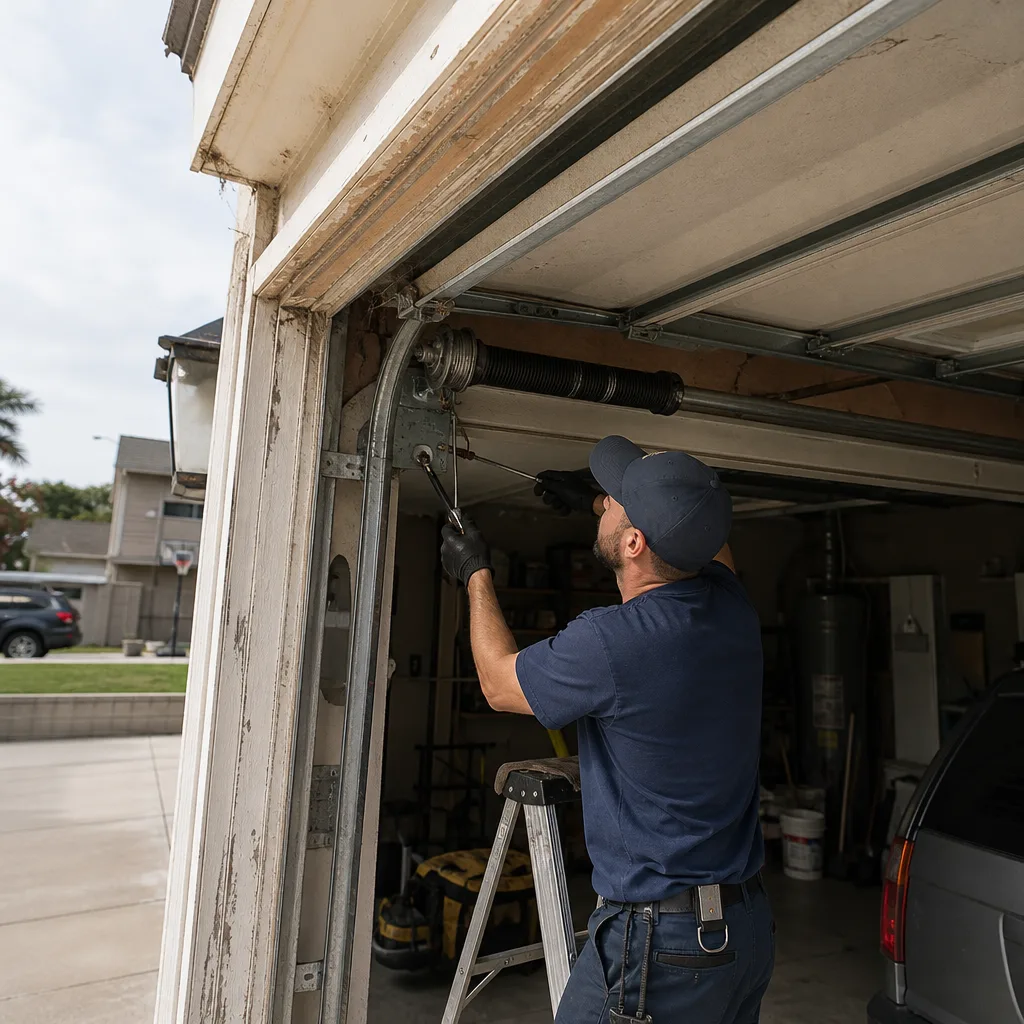 Before
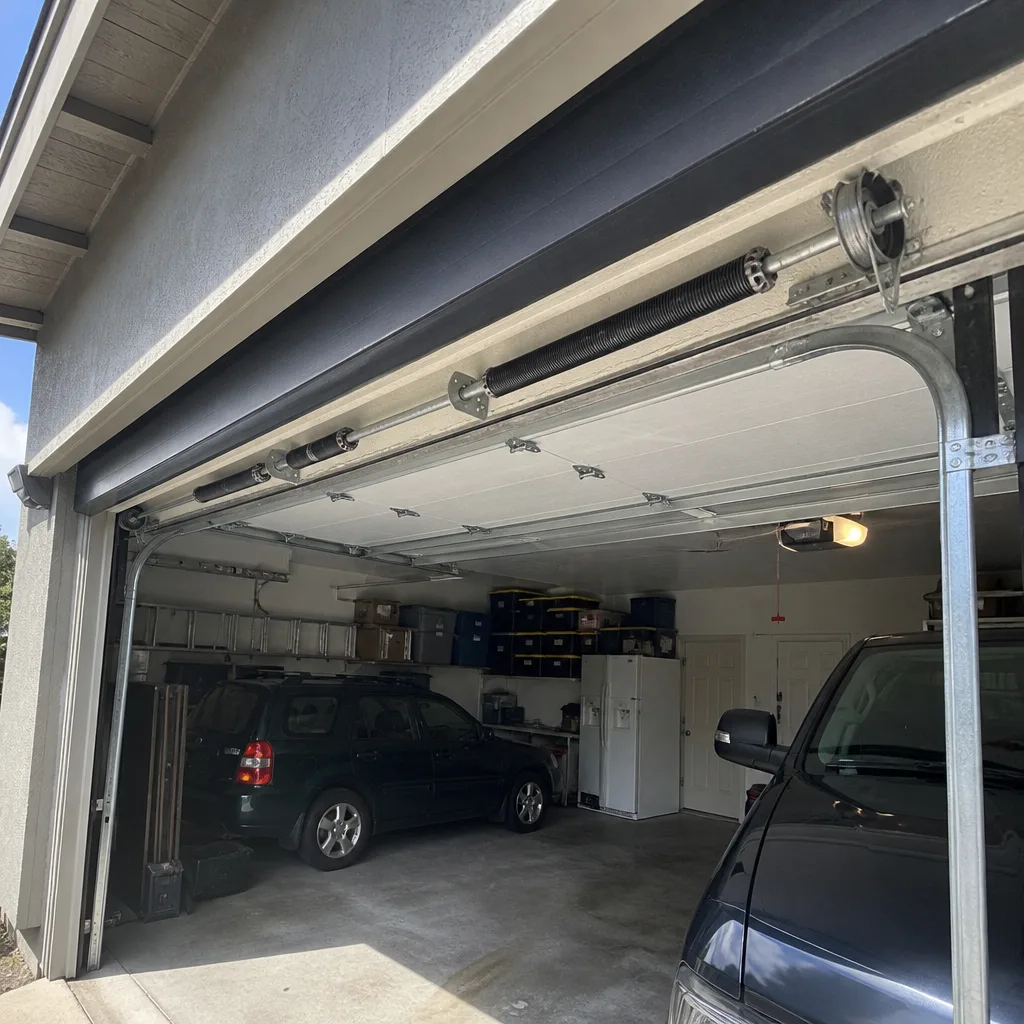 After
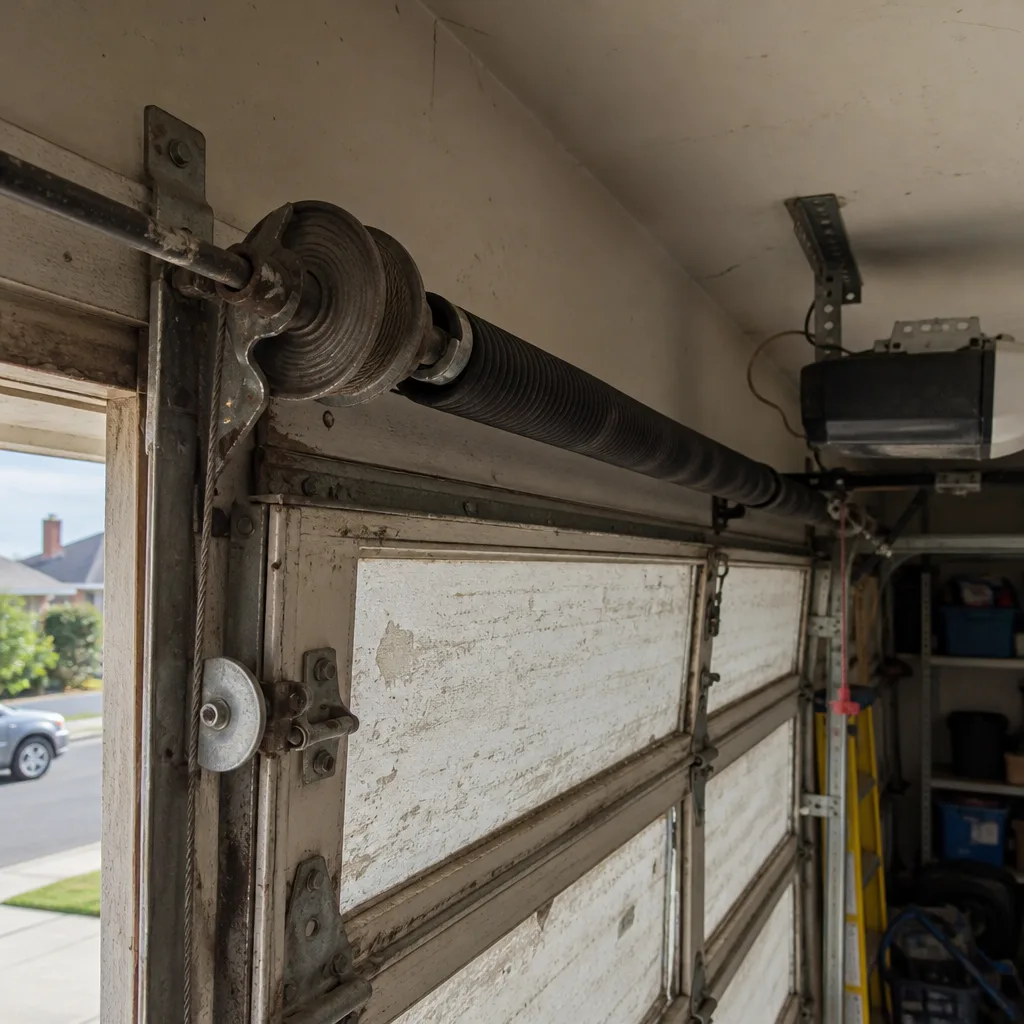 Before
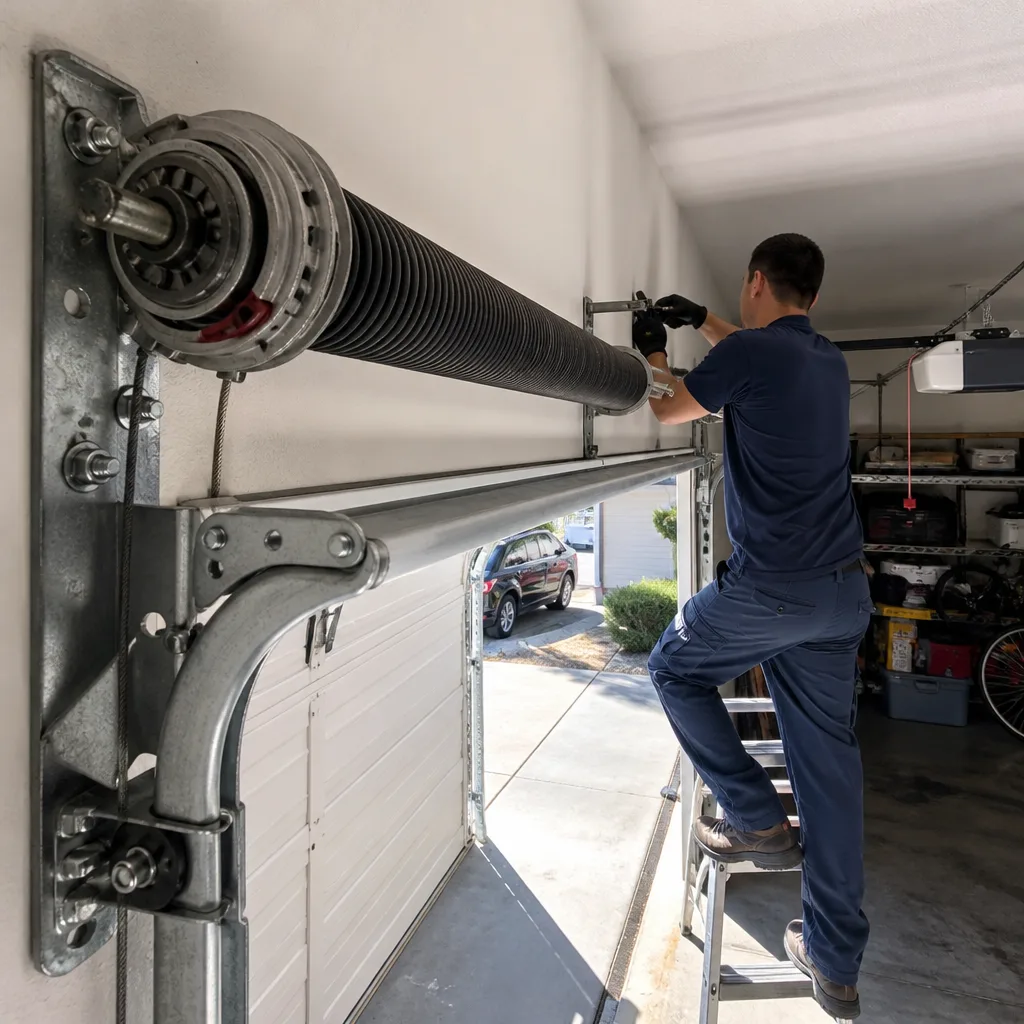 After